

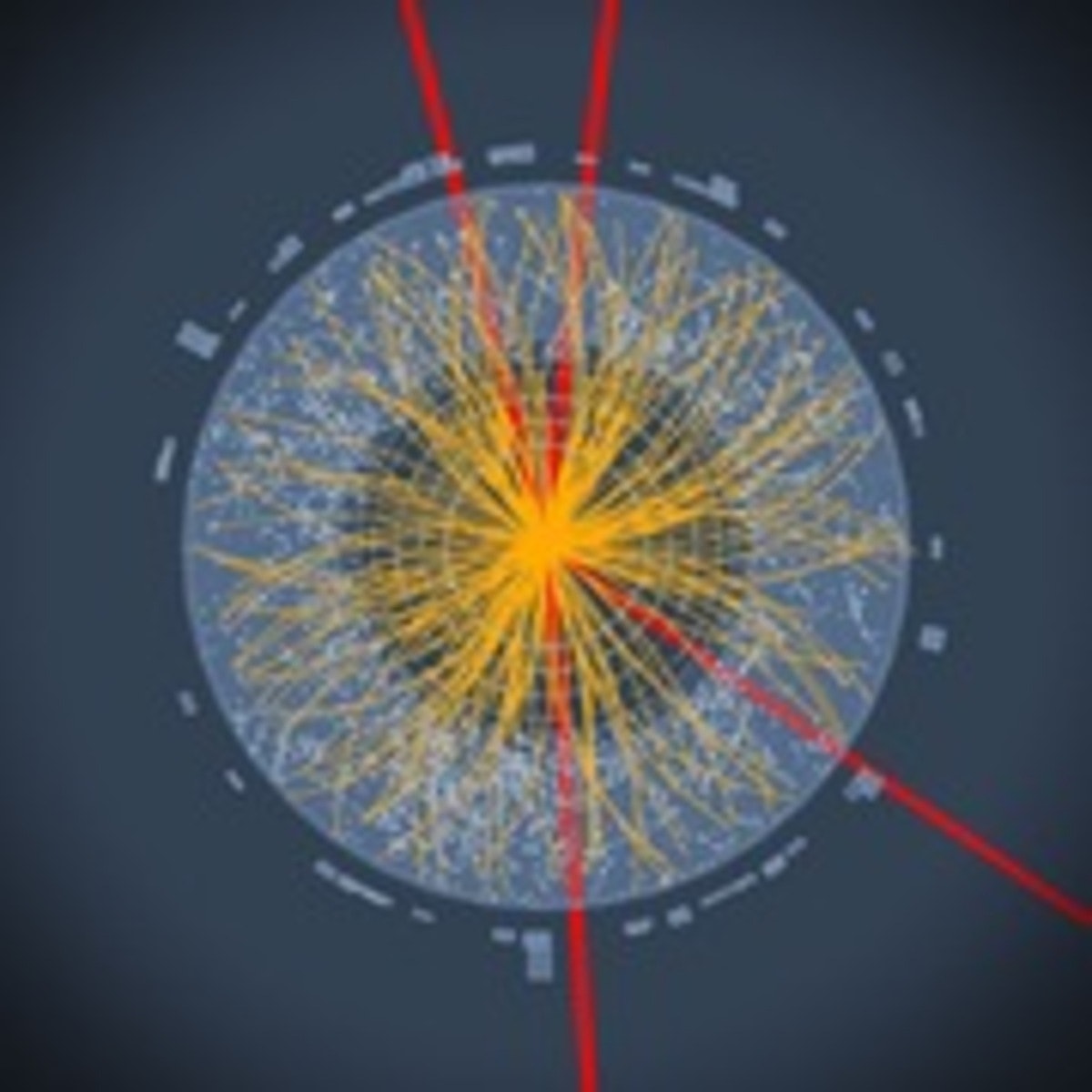
This course introduces you to subatomic physics, i.e. the physics of nuclei and particles. More specifically, the following questions are addressed: – What are the concepts of particle physics and how are they implemented? – What are the properties of atomic nuclei and how can one use them? – How does one accelerate and detect particles and measure their properties? – What does one learn from particle reactions at high energies and particle decays? – How do electromagnetic interactions work and how can one use them? – How do strong interactions work and why are they difficult to understand? – How do weak interactions work and why are they so special? – What is the mass of objects at the subatomic level and how does the Higgs boson intervene? – How does one search for new phenomena beyond the known ones? – What can one learn from particle physics concerning astrophysics and the Universe as a whole? The course is structured in eight modules. Following the first one which introduces our subject, the modules 2 (nuclear physics) and 3 (accelerators and detectors) are rather self contained and can be studied separately. The modules 4 to 6 go into more depth about matter and forces as described by the standard model of particle physics. Module 7 deals with our ways to search for new phenomena.
And the last module introduces you to two mysterious components of the Universe, namely Dark Matter and Dark Energy.
