



Telecoms are using drone tower inspection to facilitate cell phone tower surveillance, improve operational efficiency and effectiveness through 5G technology roll-out. Edge technology is a disbursed computing framework that enables data to be processed relatively close to where the drone sensors capture it. The edge gives drones the power to manage data much more effectively and more securely than existing network with its convergence of technology and connectivity. To help programs that is part of the drone-based Internet of Things ecosystem, it offers reduced lag and effective use of device and web resources.
Drones can simplify data management with the AI computational power and transmit data straight to the cloud for storage and processing. Edge computing also enables data to be transmitted right from the position of the drone, for example inside a cell tower or data center on local edge.
These innovations have important consequences for the distribution and inspection of drones, allowing businesses and public safety authorities to incorporate more drones to conduct complicated tasks of any situation that produce and consume massive volumes of data and leading-edge inter connectivity.
The geographically distributed edge is rapidly becoming a real thing as native cloud computing are deployed by Microsoft Azure as well as other cloud server that are steered towards more linear edge locations. Private Long Term Evolution, on the other hand, is speeding up globally, allowing operators and other non-conventional mobile network operators to use edge-connected clouds to actively support their drone operational processes through AI.
We see global wireless connectivity and native data center vendors interconnecting with back end, entirely standard-compliant Long Term Evolution platforms that influence the same native cloud computing. The commercial wireless telecommunications edge and AI – edge configuration will enable higher interfaces and business strategies for wider implementation of drones.
Tower inspections Use case

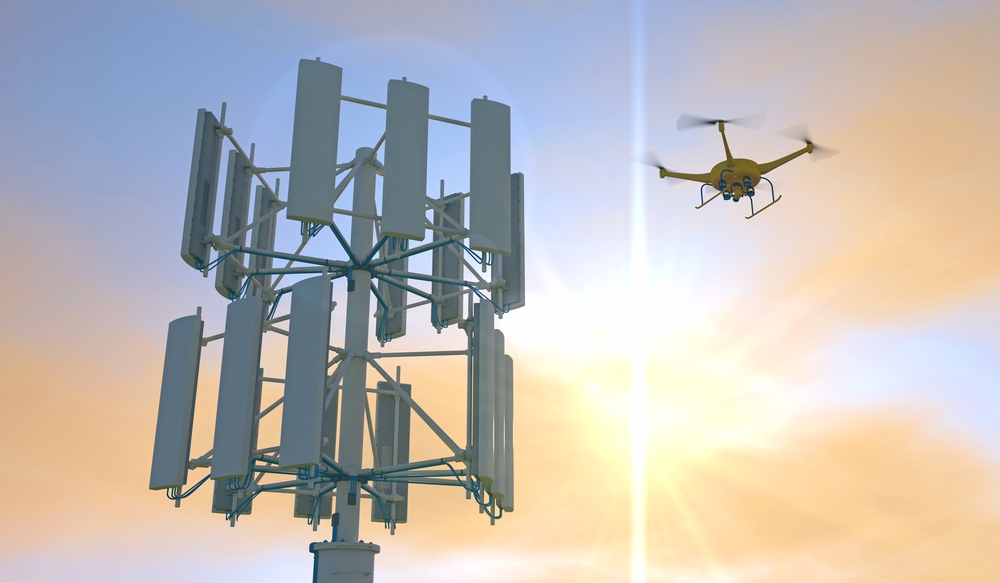
Modern drone tower inspection make great use of automated processes: aircraft planning, data collection and data management are indeed automated with AI. Drone automation technique allows telecom to generate high-precision smart technology of their facilities, set up accurate stocks of their transceiver devices, quantify transmitter tilts, spot corrosion, and wireless plan tower monitoring within spectrum.
When networking advances and AI improves, we can anticipate seeing those drones at the horizon, complete autonomous tasks and transmitting files straight into the cloud, enables large business opportunities for telecom sector as well as other businesses.
Portable edge will create operations, flexible intelligence sharing and ultimately urban air mobility and beyond visual line of sight feasible. With 5G, edge-based drone surveys may become the norm, activating accurate innovation, creating immediate perspectives and enabling automatic duties based on the visual systems and sensors. Lastly, these economic benefits will mean significant savings for Wireless telecommunication firms and tower monitoring companies.
The next generation Drone package

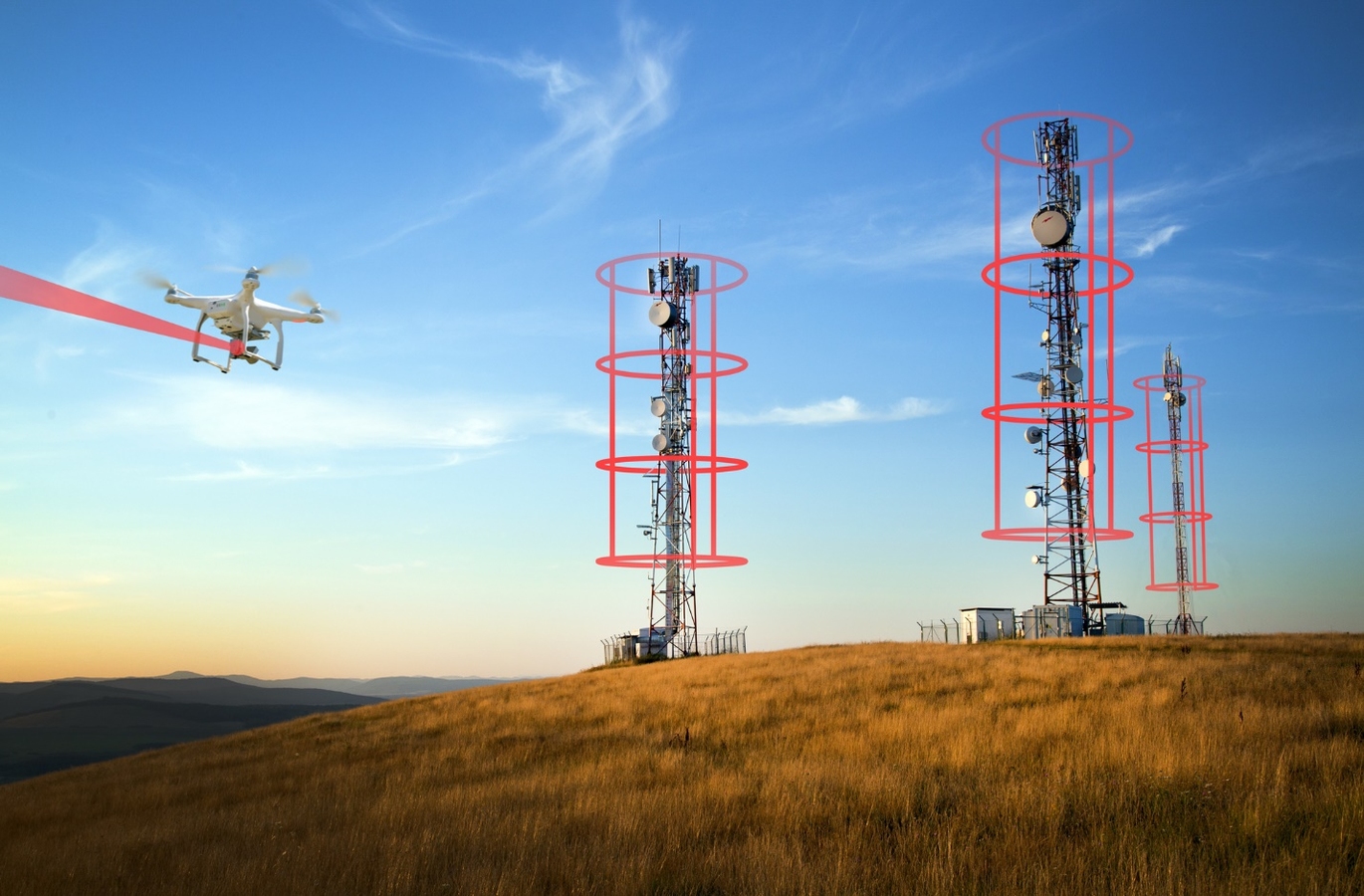
Drone-in-a-package reflects drone innovation for next decade. Telecom companies will lease suitable edge rental properties to data centers, allowing edge computing for drone tower inspection. These drones will then be installed across the world at local edge locations and perform operations in their region independently, involving tower inspection and several other collaborative business operations. They would also come back to their bases, from which they can recharge and transmit data to the server. It is a completely automated alternative that maximizes edge technology and networking capabilities and gives businesses access to low-cost edge computing resources for drones.
Long-term uses at the edge
Drones located at the edge will be a vital component of any facilities which will be used to execute public benefit tasks such as infrastructure evaluations or objectives of public safety. We are living in an ever-increasing economy of shared capital. Drone equipment is important community tool that will be used by various parties, like community safety, Emergency Responsive Teams and several other firms in multiple sectors, including transportation, infrastructure, insurance, real estate, and farming too. Both stakeholders would use the same physical networking, edge cloud computing and drone facilities to allow their implementations prosper from automation implementing AI within edge tech connected devices.
The full stack of subsequent usefulness is described initial use cases, along with that cellular tower examination, supporting comes for free. Drones at the edge are a new concept of automation and enhancing it with Artificial Intelligence, which could radically change telecom industries, change environmental assessments and generate interesting new products that support both community and business.
Drones, AI and digitization are rescuer for tower technicians.
Now 5 G implementations continue to gather speed globally, the size of the network and the number of sites will expand. Here’s a glimpse at how drones, machine learning and AI-powered applications significantly help the delivery and roll-out of sites while reducing risks to health and safety.
5G roll-out aims high
As 5 G networks started to generate speed, we are already aware that the number of network sites will increase. To get mobile networks closer to consumers, we need to install smaller cells in more areas, while existing macro sites will also be strengthened with 5 G to provide much required network strength. According to the convergence report, monthly data usage will hit 45 GB per smartphone by 2025, in North America alone.
Kicking out further sites also means discovering new ways to deploy 5 G apps. Another choice is to use lamp posts, traffic lights and other street furniture in crowded city centers, as is being implemented in busy cities like New York. Macro sites must make way for 5 G technology, which also translates into intensified demand for skilled tower technicians to perform site assessments, deployment and maintenance technology. With 5 G installations growing, as we see in this recent Fox News report, hundreds of brave technicians may be required to cater for the market.
Once on site, a drone pilot can quickly set up and fly a camera-equipped drone on a predetermined path around a tower, snapping digital photos of the whole structure. Experience has shown that a complete set of images of a typical telecommunications tower can be captured in just 30 minutes!
Flying drones can document all a site’s exterior data, including not only antenna and radar systems, but cable lines, access roads, etc. A short flight around a tower permits taking enough images to digitally reconstruct the site at a later stage. The interior of a network (equipment space, cabinets and so on) could also be captured with the aid of technology, although of a more “terrestrial” type: using high-definition 360º cameras, field staff can scan a complete equipment space, allowing recording of its layout and a vast array of monitoring equipment with sub-centimeter precision within.
The future looks promising in relation to these kinds of projects. Additional features will be introduced with the help of AI-based development to further enhance Intelligent Site engineering support, ultimately enabling the automated production of full site supplies and lists of materials, reducing costly mistakes and waste. Automation would also enable the comparison of situations before and after, enabling more precise production of “standard-built” data. In addition, corrective and preventative inspection will strive to be improved, leveraging on previously established AI technologies that have enabled us to illustrate how drone inspections is used to detect and diagnose cabling issues. AI and ML systems can help recognize problems with cabling as well as other performance-influencing issues such as oxidation. As network roll-out continues to get smarter, the better thing for people (like me) who fear heights is that there’s very little need for any climb!
Conclusion
A conventional AI evaluates its surroundings and
makes decisions to maximize its chances of succeeding. The desired objective role of an AI can be clear or complicated to Perform
mathematically similar acts to those that have worked in the past. Goals
can be set or triggered directly. If the AI is programmed to “reinforce
learning,” objectives can be indirectly stimulated by enriching certain
forms of activities.