


Going all cloud is the new age buzz among many enterprises. With the rise of the pandemic, many organizations were forced to work remotely. This is where cloud services were a big help to such businesses to facilitate remote work. However, the problem was to make the switchover.
Migrating to the cloud from the legacy infrastructure is not that easy. Every organization planning to migrate needs to assess existing infrastructure, strategize, execute, and measure the migration process. It‘s the measuring part that is one of the most critical aspects that many enterprises miss out on.

Source: Cloud Monitoring 101: Solutions, Benefits, Best Practices & More (hitachi-solutions.com)
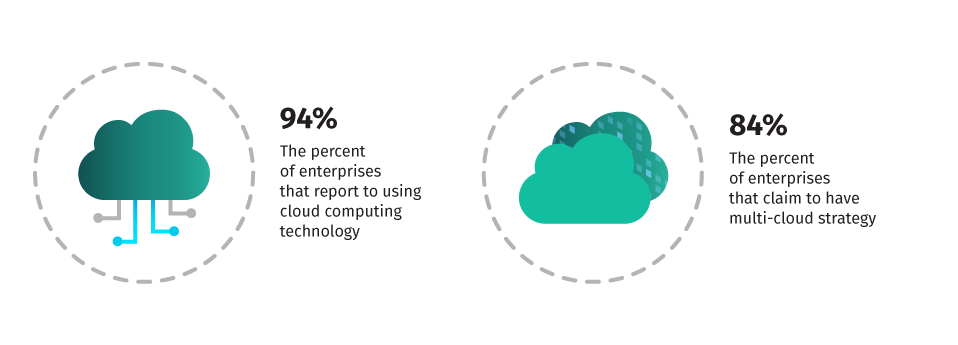
With 94% of enterprises using cloud services, and 84% saying to have implemented multi-cloud strategy, cloud monitoring becomes key to success. So, here we are with some of the most significant cloud monitoring KPIs, and metrics to keep in mind for post-migration assessments.
Infrastructure KPIs


Infrastructure KPIs are key measurement indicators of your system’s capabilities post-migration. Every organization tends to spend money on cloud migration to improve the infrastructure capacity to handle higher loads. Measurement of infrastructure KPIs can help you understand how much improvement is achieved in hardware, and network components.
Virtual Private Cloud(VPC) networks need monitoring of the performance of different network nodes. It has local data centers to archive the essential services and even security data.
Measuring the network components ensures no data loss, especially for core services and security information. However, if there is any data loss, you can opt to choose data recovery software to extract lost information, but measuring these KPIs can help you source data leakage.
These KPIs are,
- CPU Usage-showcases how the application uses much computational power.
- Memory Footprint-indicates how much memory is used by each service in the app.
- Disk Performance helps measure the capability of local data centers to handle dynamic data and peak traffics.
- Load balancing- showcases the ability of migrated infrastructure to balance the dynamic load of data.
- Latency- measures the difference between the data transmission and received at endpoints of infrastructure.
Post-migration assessment does include the migrated infrastructure, but core services and security data lie in the local data centers, which need thorough monitoring.
Data Center Monitoring


Modern data centers need reliable solutions to monitor the health of servers and improve data management. Measuring related data metrics and KPIs can help you monitor data centers to gauge the capabilities. Let’s look at some of them,
Measuring Resources
Datacenter managers need to make data-driven decisions when it comes to handling vital data. So, you need a proper visualization of the KPIs and metrics to understand the true capabilities. It can be excellent when you need to reserve space to provision equipment, efficient power usage, and optimization of OpEx(Operational Expenses).
Visualization can offer accurate data, real-time information on memory footprints, power consumptions, cooling requirements, and even network connectivity. For comprehensive analytics, you need to monitor,
- Capacity onsite
- Room space/floor space
- Cabinets holding drives
- Port levels
- Cooling towers
Server Performance Measurement
Data centers have plenty of servers for managing the core service data and security information. So, server performance is key to all your data management. The first and one of the most important metrics to measure is servers’ ability to detect problems.
For example, servers are often used for web hosting, and it becomes vital for the performance of your web apps to indicate corrupt data or other errors. Though if you are using cloud-based web hosting, you can leverage debugging services pre-built in the architecture. But, that depends on the type of database system you are using.
Another server performance metric that you should measure is the security of the data. According to a report from IBM, organizations worldwide lose about $4 million due to lack of security across data centers. So, how secure your data center servers are can make or break your business.
Other important KPIs to be measured for data centers are,
- CPU usage
- Memory usage
- Disk space
- Process utilization rates
- Bandwidth of network
- Average response time(ART)
- Thread count
- Server Throughput
Virtual Network Monitoring

A virtual network is a key to cloud-based infrastructure, as most data transmission occurs through it. Here, it is essential to keep an eye on the connectivity and operational health of network components. Especially the traffic handling capacity of a virtual network can help you understand how you can achieve zero downtime. Some of the metrics for virtual network to be measured are,
Network Nodes
Network nodes are your connecting points in a network that facilitate the transmission of data. Depending on the network type, the proximity of nodes is decided. For a virtual network, nodes can be anything from local data centers to virtual machines with remote physical servers. Monitoring the performance of nodes for different metrics will help you improve the data transmission efficacy, enhancing the user experience.
Some of the key metrics to monitor are,
- Bandwidth usage
- Throughput of the nodes
- Latency of data transmission between nodes
- Data packet loss
- Connectivity
- Retransmission of data
Networking Software
All the nodes in a network are regulated through software, allowing enterprises to control throughput, latency, and even security. Calibrating your network needs software customized for specific functions. Customization of software can be done in two ways, either by creating software from scratch or outsourcing the development.
Network Operations(NetOps) and Security Operations(SecOps) are the main functions of networking software. These operations ensure that the traffic flow is efficient and secure enough for data to be transmitted between different nodes.
App Performance Monitoring


Once you have migrated to the cloud, application performance monitoring becomes key to understanding the migration process’s benefits. For example, when you measure the CPU usage of your application, it will indicate the Resident Set Size(RSS), which showcases the memory footprint on a device. Lower the memory footprint better the user experience.
Here, the architecture of your application becomes vital, which is why many organizations also look towards Kubernetes. It is based on containers at its core that helps in delivering lightweight apps even for complex features. Businesses can even use the Prometheus operator for Kubernetes. It enables native development with the Kubernetes for simplified development.
Whether you choose cloud-native development or Kubernetes, app performance metrics that you need to monitor post-migration are,
- Failed requests/total requests
- Availability
- Latency
- Total time-outs
- Average Response Time (ART)
- Peak Response Time (PRT)
- Total Uptime
Conclusion
Cloud migration is a data-driven decision and can’t be taken without enough information. Even post-migration measurements are essential to assess the application and decide whether the current cloud service is worth your investment or not. KPIs, parameters, and other such performance indicators are your decision drivers. So, start measuring your cloud-based services to know the right direction for your business!