

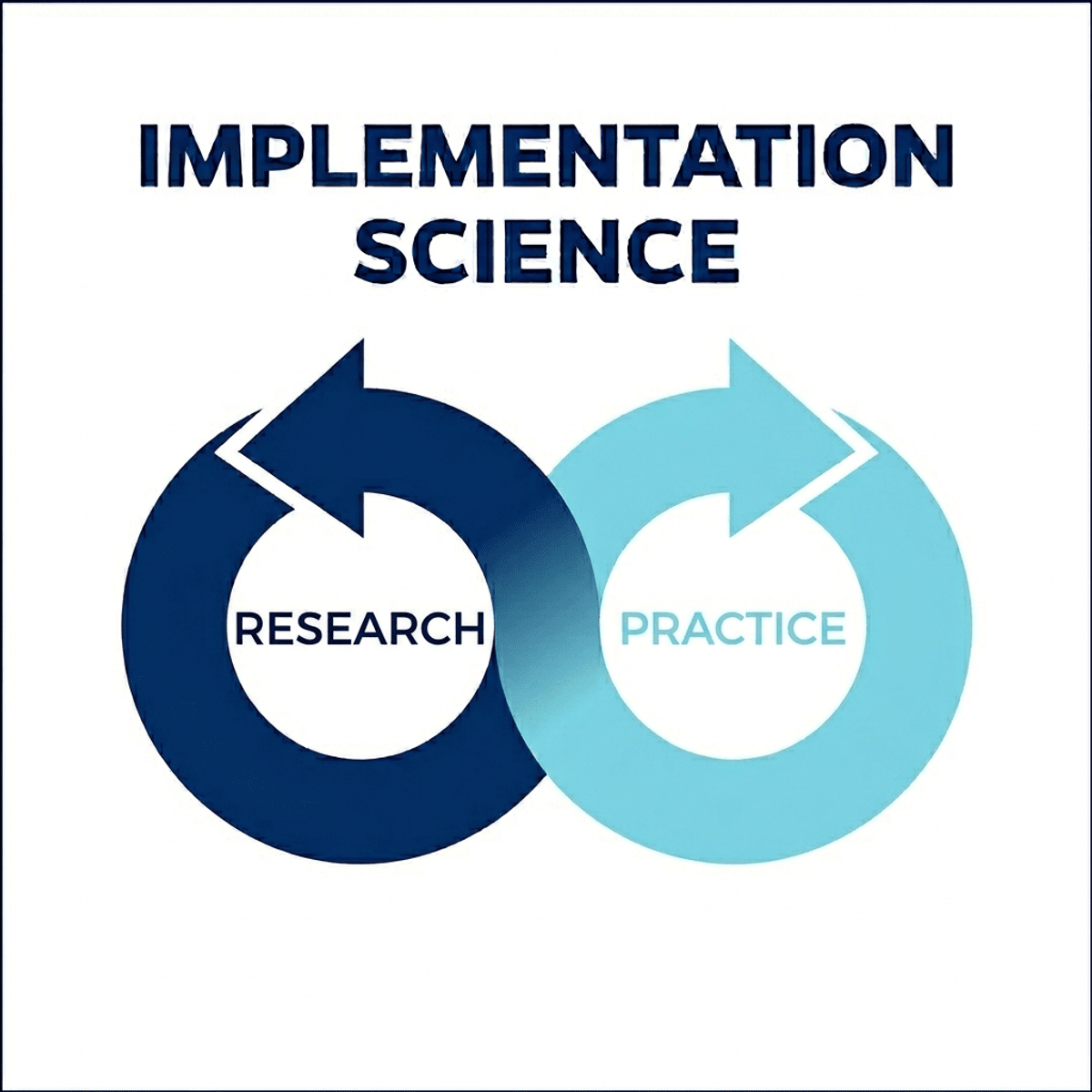
By the end of this course, learners will be able to distinguish implementation research from clinical effectiveness research; identify common implementation problems; use theories, models, and frameworks to assess barriers and facilitators; select and specify implementation strategies; choose pragmatic implementation outcomes and measures; and propose feasible study designs for evaluating implementation efforts in real-world settings. Through six instructional modules and a final synthesis module, this course introduces core concepts and methods in implementation science, with an emphasis on designing practical research that is useful for decision-makers, implementers, and communities. Learners will explore implementation science fundamentals, mixed-methods and hybrid designs, determinant and evaluation frameworks, implementation strategies, implementation outcomes and measurement, and randomized, pragmatic, and adaptive study designs.
What makes this course unique is its applied, step-by-step structure. A running case study on integrated community case management in rural Madagascar, together with role-play labs and applied discussion prompts, guides learners through the process of moving from an implementation problem to a research question, determinant assessment, strategy bundle, measurement plan, and study design. Each module includes video lectures, core readings, quizzes, and opportunities to apply course concepts to real-world implementation challenges.
