


If you are looking for a new career path or a job change and you are more of a person looking up to a higher payoff and career growth- Cybersecurity is the answer to all your dilemmas, Cybersecurity has many such opportunities with lucrative payoffs and a career that has everything from flexible working conditions to skills development for a better future. Due to high malware and viral attacks on systems and higher risks of data theft and identity theft on the online channels, the need for cybersecurity systems has increased.
This has led to an increase in vacancies related to cybersecurity and more and more businesses and enterprises are after the people with the right cybersecurity skills to make their systems more secure. Transitioning your career towards cybersecurity can push your career to reach its true potential.
1. Transitioning to Cybersecurity:
There has not been a better time than the current one for a transition towards the cybersecurity career. Cybersecurity has seen an uproar in recent times. There is this myth about Cybersecurity careers that they are only for IT pros and non-IT pros have bo place. The truth is, on the contrary, is that people from different realms of maths, science, history and even philosophy have contributed to the cybersecurity paradigm.
Identification of job interests, payoffs and career skills related to cybersecurity is important. Searching for the right job, curating your resume for the same and preparing for the interview are all essential factors for a career transition. But, if you are planning for a career transition after a few years or a few months maybe, try focussing on key-roles in your present IT surroundings to grab some skills like:
-
Exchange administrator -Email security
-
Network administrator -Network security, forensics, etc.
-
System administrator -Security administrator, forensics, etc.
-
Web developer –Web security, security software developer, etc.
Benefits Of Transitioning:
1. Higher Payoffs:
Cybersecurity jobs are considered as one of the highest-paid jobs in the IT sectors. Scout Exchange’s data suggests that with an average salary of $140,000, Security Engineers stands the highest paid jobs and most recruited jobs in 2019. Another Cybersecurity job that scores high is the Chief Information Security Officer(CISO) with the salary ranges of $175,000 – $275,000.
2. Spending on Cybersecurity:
In 2019, the Cybersecurity market is forecast to grow 8.7% to $124 billion which was $114 billion in 2018. This data is the pure evidence of global spending over the cybersecurity of soaring heights.
3. Millions of Vacancy:
According to a forecast from Cybersecurity Ventures, an estimated 3.5 million unfilled cybersecurity jobs will be available by 2021. As the data suggest Cybersecurity jobs are soaring up and are on a high-demand.
4. Zero Percent of Unemployment:
Current data trends suggest an astounding 0% unemployment rate for Cybersecurity Pros. This is a great advantage for job seekers to pounce on.
5. Range Of Career Options:
There are many career options and all of them provide more than you can think of. Careers like Security Analysts, security auditors, security managers, security directors, data forensics officers, chief information security officers, etc. can be chosen for a career switch.
6. The flexibility of Work:
You may choose the work from home option or have working hours of your preference with the cybersecurity job profile. This offers the convenience of working at your preferred time and place.
7. Demographic Preferences:
You may choose the destination you dreamt to work with cybersecurity as there is a demand for these jobs all over the world. Just think of a country like India with 1.34 million population has a potential cybersecurity vacancy of more than 1 million by 2020, according to NASSCOM.
Certifications for cybersecurity:
1. Certified Information Systems Security Professional (CISSP):
Certification to learn the basics of design, implementation, and management of cybersecurity program
2. Certified in Risk and Information Systems Control (CRISC):
Certification that provides knowledge to the IT professionals and employees to deal with the challenges of system security and risks related to it and help enterprises counter the same.
3. Information Privacy Professional (CIPP):
Certified information privacy professional can keep a check on information privacy laws and enhance the system’s adherence to the same to avoid data risks and information security for enterprises,
4. Information Systems Auditor(ISA):
Through this certification, you can attain the skills required to audit, control, monitor and assess information technology and business systems.
5. Network Associate Security (CNA):
A Certified Network Associate Security professional can develop a security infrastructure, recognize threats and vulnerabilities to networks, and mitigate security threats.
6. Computer Hacking Forensic Investigator(CHFH):
Computer hackers have grown smart and more advanced and this certification helps IT professionals gain skills to counter them with computer investigation techniques that are being used by police, government and corporate entities globally.
7. Certified Ethical Hacker (CEH):
An ethical hacker is just like any other hacker but on the right side of the law. You can be an ethical hacker and test target systems for malware penetration tests and vulnerabilities.
Specialization:
The importance of specialization in Cybersecurity is quintessential to your transitioning plan. As there are numerous career paths in the Cybersecurity realm. Choosing the right specialization can bring you a career that can be lucrative and satisfying. It has different career paths like Analytics, auditing, engineering, accounts, management, etc. You may choose any of the specializations and look for a hands-on experience of the same, to add to your resume before the grand face-off for the interview.
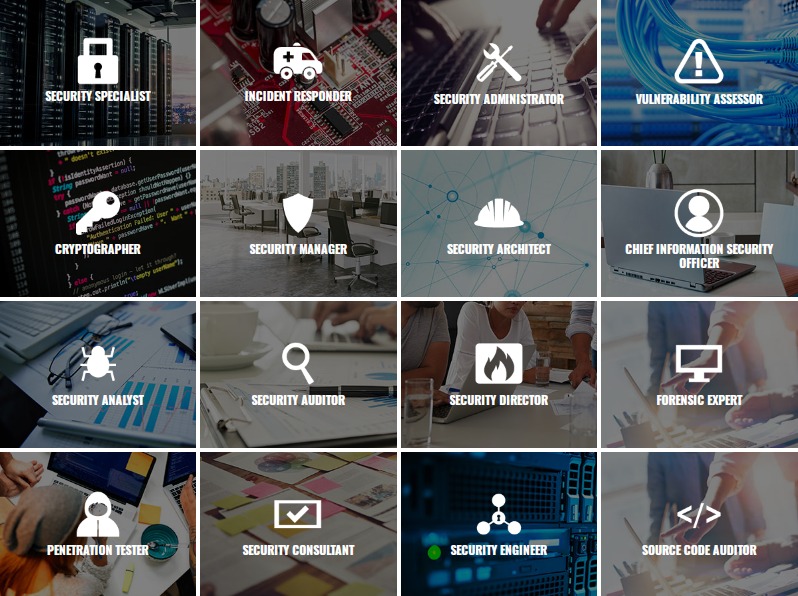

Image Source: cybersecurity education
For Choosing The Right Specialization, Use These Questions:
1. Are you a people’s person?
If you are good with people, you may choose to work with the sales team of security solutions as a technical sales promoter giving demos regarding security aspects to increase the sales. You can also choose the CISO profile that needs vital people’s communication skills.
2. Do you have a strong Technical Background?
Strong technical skills can be helpful in jobs like security data forensics or security analyst jobs.
3. Are you an excellent hacker?
If you have strong hacking knowledge, you may choose to be a technical security auditor, vulnerability accessor or penetration test auditor.
4. Do you have good coding knowledge?
If you are good at coding, then you may be well-versed in coding software and the same can be done for security software and secure coding.
Job Research:
Secrets to job research are not that complex if you know what you want from your career ahead, the job research will not be loathsome activity. Look beyond the online job search methods and try to connect with people and professionals through other channels to maximize your job research window.
Informational interviews can be conducted with peers of your specialization and professionals already on the career paths. These interviews can render the experience of real-life working conditions, job work, employee’s point of view and a feel of the workplace, job, and activities that would be the part of your career shortly.
Cybersecurity Training:
The training has two vital components
1) Theoretical Training
2) Hands-on practical training
Theoretical training is important for the fundamentals of the various aspects of cybersecurity. But, hands-on experiences provide the necessary push to your resume to drive more salary and perks towards your job profiles. Some employers may require you to hold an advanced degree such as a master’s degree in cybersecurity.
A master’s degree provides enhanced knowledge on protecting computer networks and electronic infrastructures from attack. Job seekers should learn ethics, practices, policies, and procedures of cybersecurity which would empower them to tackle network security defence techniques and countermeasures. Even currently employed professionals can earn certification to boost their skills while working full-time to gain hands-on experience.
Benefits of an IT certification:
1. Strong Resume
2. Enhanced Knowledge
3. Experience that pays
4. Further enhancement through Masters
5. Tapping into multivectors of Cybersecurity.
2.Transitioning from an IT Career:
Experts suggest that you may begin with a job, internship or apprenticeship in the IT sector before entering into the Cybersecurity realm. Fundamentals such as administering & configuring systems, networks, database management, and coding can be learned before your transition through the exposure from an IT job early on. A sense of IT procedures and real-world business operations can be developed through this method, only to enhance your skills.
Cybersecurity Pro shadows:
Cybersecurity professional shadowing is a brilliant way of learning the fundamentals of a security system without even bothering your cybersecurity colleague. Often IT professionals work with cybersecurity professionals and the same can be exploited by assisting these colleagues of yours through the different tasks. You may choose the task you can help them with and if the time is a constraint then ask your higher authority to provide some as while assisting your cybersecurity professional in the tasks you will be able to learn the basics of cybersecurity.
Security Systems:
Knowing the security systems is a vital element of your transition and the same can be achieved by volunteering for tasks and activities related quite closely to security systems of the company or enterprise. For this, you must have some fundamental knowledge around the system infrastructure and security methods.
Assessment of IT gaps:
Assess your IT gaps that should be reduced to transition towards the cybersecurity career. To assess the gaps in your skills, you should assess the shadowing attempts made by you with your cybersecurity team and try to understand the key differences in the skills required for any given task related to Cybersecurity.
Career development to compliment Cybersecurity:
Developing your career to compliment your Cybersecurity aspiration can be achieved by choosing a role early on that can ultimately lead up to the Cybersecurity career. Below given options can be chosen early on keeping the future in mind:
- Computer Programmer
- Computer Software Engineer
- Computer Support Specialist
- Computer Systems Analyst
- Database Administrator
- IT Technician
- IT Technical Support
- IT Customer Service
- Network Administrator
- Network Engineer
- Network Systems & Data Analyst
- System Administrator
- Web Administrator
3. The transition from Non-IT Career:
The transition from a Non-IT background has both sides to it, a good one and a bad one. There is this beginner’s luck that can help you mitigate the IT gaps of an IT professional and yet the negative side of not being from an IT background can hurt your chances too.
Leveraging the beginner’s luck:
You can leverage the beginner’s luck by engulfing various IT basics and advanced methods that are not easy for IT pros to learn while being on the daily-work basis. This can be done by various certifications and learning courses to add to your strong IT-Cybersecurity integrated learning.
Certifications for cybersecurity and IT:
You need to find integrated courses and certifications that offer both Cybersecurity skills and IT-related knowledge. this will surely enhance your chances to make it to the Cybersecurity career. Take, for example, the data analytics courses, this can help any non-IT candidate find a career in Cybersecurity as a data forensics professional.
4. CV and Interview Strategies:
Strategizing your resume and interviews can make your chances more fruitful and give you an all-important transition you need in your career,
Revisiting the CV:
Revisit your CV(Curriculum Vitae/Resume) to find in the related skill gaps and information that is missing that can revamp your overall profile as a professional. Keep your vital skills easily accessible and readable. Don’t make your Resume look clumsy and overcrowded by unnecessary data.
Strategize your Interview:
Once you get the info on your D-Day(Interview Date), revisit your fundamentals, strategize your interview with easy on the eye answers that do not increase the complexity of your conversation with the interviewer.
Clothe yourself with a formal attire if possible, look civilized and decent in your tones while the conversation is on. Be early to avoid the last time rush which can lead to your clumsy and messy look. Keep your answers short and stay-put on the subject.
Eagle Eye for the right job:
You should have an eagle’s eye on the job you want to pursue and work in that direction. For example, if you want to be a security software developer, you can start by a simple developer job and walk your way through the ranks.
Linkedin enhancements:
Enhancing your Linkedin profile can help your career differently altogether. Linkedin profiles can be made more effective by adding new connections to your network that are already on the cybersecurity professional front. Some other important tips are:
-
Make your profile more visible
-
Use Linkedin Blogs to showcase your technical prowess
-
Make use of Linkedin Learning feature
-
Add those courses to your profile
-
Add Vital skills through quizzes provided on Linkedin
5. Make your chances more fruitful:
There are several ways to make your chances tick at the moment of truth. Tricks like networking can bring about those vital connections that lead up to a better job offer than you could fathom.
Importance of Networking:
Never underestimate the power of good networking! Networking can improve your reach and improve your chances of recruitment through positive referrals. Networking can be enhanced through blogpost followings, Linkedin profile connections, Social media platforms and even by an in-person connection through conversations on Cybersecurity topics and skills.
Data Analysis Skills:
This is the most vital skill of all in today’s data-based systems. Data Analytics is widely used today for threat detection and penetration tests of unknown viruses and malware. A cybersecurity professional with the knowledge of data analytics is a must these days. In these circumstances, any job-seeker should turn to several data analysis skills to make their chances more fruitful.
Take the initiative:
This is the best thing to do if you are an IT guy looking for a transition towards Cybersecurity. Take that first step and rise, when there is a Cybersecurity project being executed in the firm to showcase your potential and attract the possibility of your shift towards the Cybersecurity department.
Create a professional brand:
This is not just for job-seekers looking to scale up to a Cybersecurity career. But, anyone looking to have their potential visible, needs to create a professional brand by tapping into various connections, social media, and online platforms to showcase the professional Branding side of themself.
Keys to Cybersecurity career:
- Take that first step without hesitation.
- Learn the trade and show your Grade.
- Keep your Skills Updated
- Be the People’s person
- Know your technical strengths
- Choose where you want to be and don’t stop
Set your goals and be there:
Remember life without a goal is like a train without a destination, which will eventually lose the fuel! So set your goals that can be achieved through above-given tricks and tools and be where you want to be.
Wrapping It Up:
There is no tomorrow if you don’t work for it Today! So, brush up your feathers and get your wings ready to map the sky of the Cybersecurity universe. Just revamp your skillset, look for the most suitable option and grab your opportunity into a highly lucrative Cybersecurity career.