


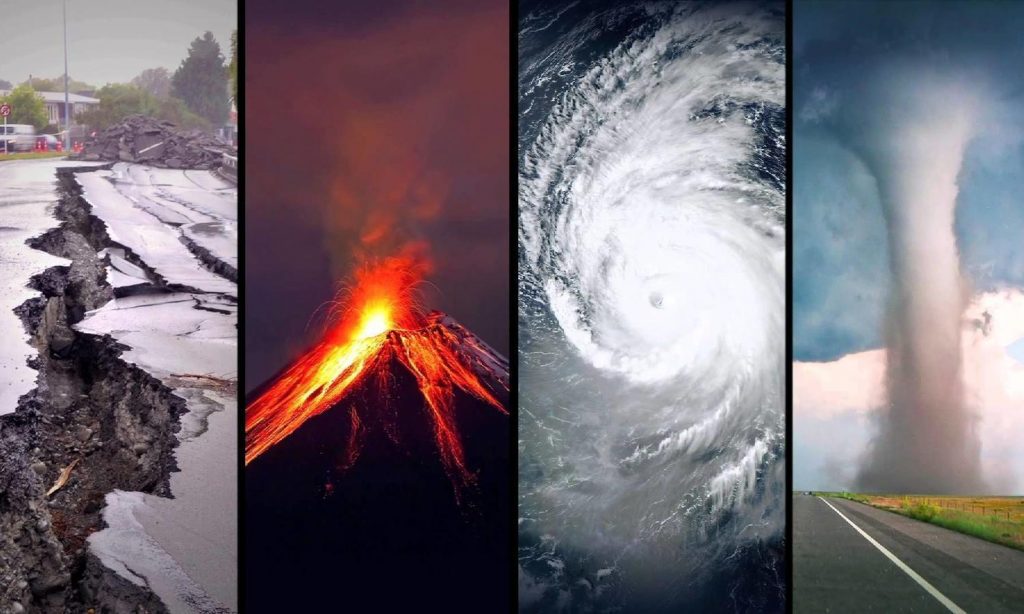
Climate change has been increasing the severity and frequency of natural disasters in recent years, which, in turn, has caused the death of millions of people in different nations around the world, and cost billions of dollars in damages.
As these storms get worse, and the population continues to grow exponentially, it has become even more imperative that we learn everything we can about natural disasters before they happen. It has been well documented that early warning systems go a long way to saving lives.
How We Are Creating Early Warning Systems
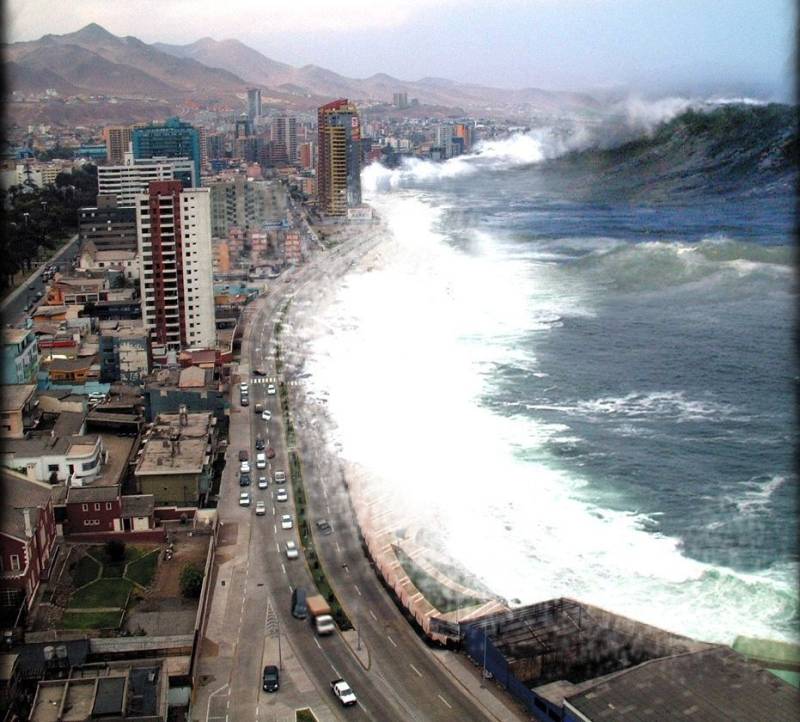
In the past, the Early Warning Systems (EWS) like satellites, seismographs, and other sensors have been improving every year, but they have not been very effective in predicting disasters with accuracy. Just look at the 2004 Tsunami in Malaysia, where the population was only given a 10-20 minute warning before they were hit. This late warning caused the death toll to reach hundreds of thousands.

Or, more recently, hurricane Matthew was predicted to hit the east coast of the United States as a category 1 storm, but that prediction was quickly changed to a category 5 super-storm the very next day. When predictions are this bad, it leaves a lot for improvement.
So, scientists are looking at a new way to predict disasters, and they have found a solution in an unlikely placethe big data exhaust from your personal devices.
Devices like smartphones, personal home assistants, and even smart cars usually have multiple built-in sensors that can gather, compute, and store large sets of data. And since there are an estimated 6.4 billion connected IoT (Internet of Things) devices around the world with these sensors, your smartphone may become a part of a network of sensors around the world that can predict natural disasters the moment they happen.
How IoT Devices Can Predict Disasters
Many smartphones come with built-in accelerometers, which allow the phone to detect changes in orientation and know which way is up. Scientists think it would not be hard to use the data that is already being gathered by these sensors to detect seismic activity associated with an earthquake or volcanic eruption.
At the moment, detecting earthquakes requires a network of seismologists, who constantly gather data on seismic activity in their area. These sensors can be very expensive, and they have to be manned and maintained. But these sensors are actually not that different from the accelerometers found in millions of smartphones. Field tests have already shown that vibrational data gathered from smartphones can identify the tremors associated with earthquakes nearly as well as professional equipment can.
Furthermore, these sensors do not need to be operated by experts, they are maintained by the owners, and, best of all, cell phones already cover the planet. So, when they do find a way to gather this data from smartphones, they can create an EWS that can detect an earthquake anywhere in the world, and they won’t have to spend a dime on expensive equipment or personnel.
How IoT Devices Can Help with Relief Efforts
Early warning systems can save a lot of lives, but thats only half the battle. The response to a major disaster is just as important as an EWS. If rescue workers are unable to get to respond, the effects can be just as devastating as the storm itself.
The United Nations (UN) has created an organization called Global Pulse that uses big data to understand the effects of storms after they hit. As the UN Secretary-General said, we believe that analysis of patterns within big data could revolutionize the way we respond to events such as global economic shocks, disease outbreaks, and natural disasters.
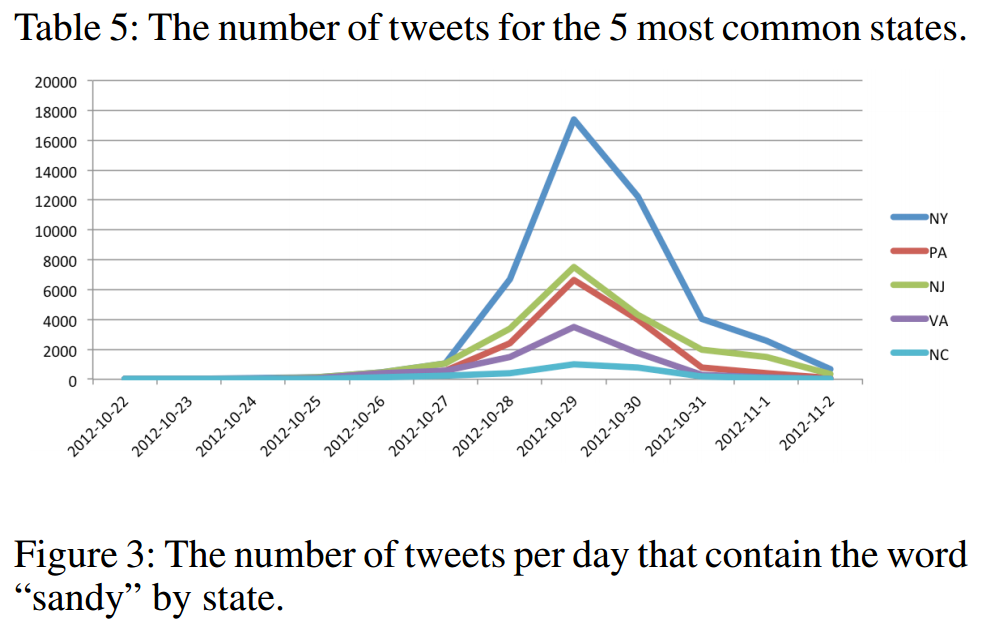
Disaster-affected communities use social media to record the destruction around them, and scientists are looking to use that data to aid in the relief efforts. During Hurricane Sandy, there were over 20 million tweets posted, which could have provided valuable information to emergency responders.

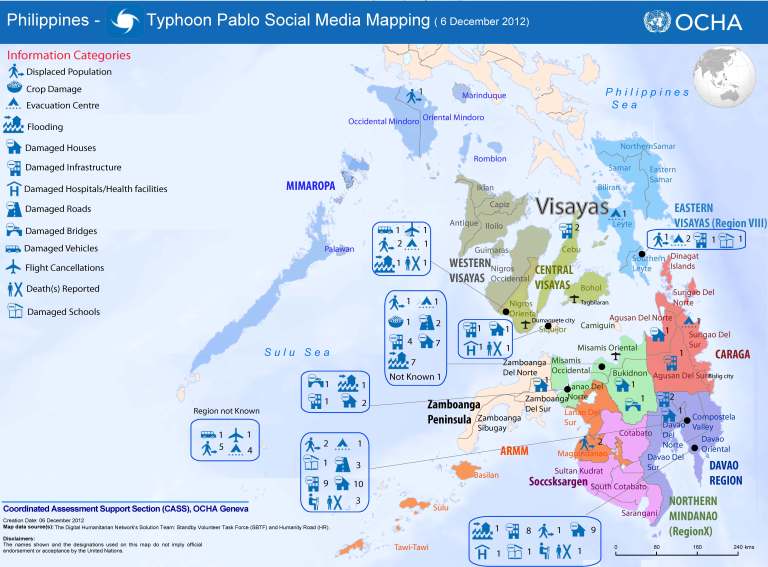
In the aftermath of Typhoon Pablo, which devastated the Philippines in 2012, Global Pulse was able to crawl through thousands of tweets, and, using the metadata from relevant posts, they were able to identify and analyze the time each post was uploaded, the GPS coordinates, and the types of damages in photos. With this metadata, they were able to create a detailed map of the storm, which helped with relief efforts as they were happening.

In the future, UN Global Pulse hopes to create an algorithm that crawls all social media posts for text and pictures that could imply the inception of a natural disaster.
It is also very important to understand the movements of a population a storm hits. It used to be very difficult to track people and send relief to the right places. Thats why researchers from Swedens Karolinska Institute and Columbia University have figured out a way to chart the movement of displaced populations after the earthquake in Haiti using their phones subscriber identity module or SIM number.
Each SIM number is unique, so they can all be tracked by nearby phone towers. And, since 88% of the world’s population owns some kind of cell phone, charting populations with these signals can be very accurate. In fact, this data is so accurate, it can even estimate the mortality rate after a storm by charting the number of nonresponding SIMs, and help rescuers know where to look for buried bodies after an earthquake.
How Big Data cuts through the Chaos
In the future, big data from IoT devices will help predict natural disaster and aid in their recovery. And soon, scientists are hoping to take it one step further with deep learning. They are using AI machines to predict a storm long before it ever forms.
IBM has linked their AI machine, Watson to the Weather Company, which consists of over 200,000 weather stations in 195 countries. With Watson, these sensors will be able to learn from previous data, and perhaps see the signs of a natural disaster occurring well before our current sensors would detect anything.
So, one day, the weatherman might not ever be wrong again.