


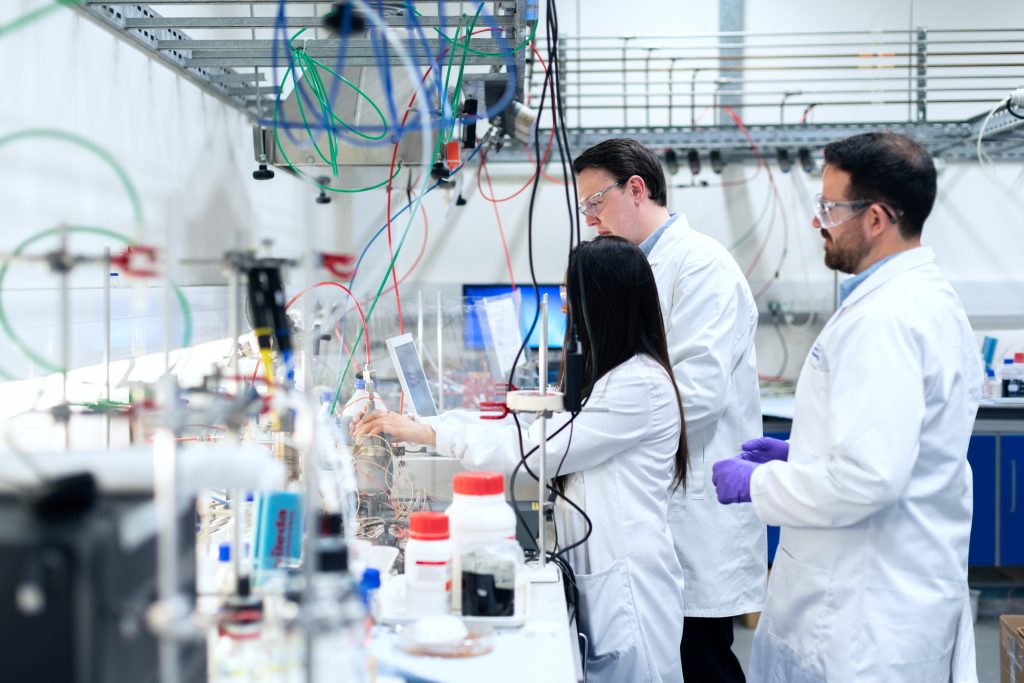
As technologies improve, facilities ranging from gadget manufacturers to commercial farms use smart sensors, artificial intelligence (AI) and other advanced options. Such progress has also spread to the biotechnology industry. Whether decision-makers want to streamline existing processes or pursue biotech innovations, it‘s increasingly appealing to digitize operations. Here are some fascinating examples of what’s possible.
A Digital Laboratory Could Support More Remote Workers
People in biotech and related industries often discuss what a lab of the future (LotF) might look like and how such a facility could impact their work. In one poll asking people to look ahead to 2030, 72% of respondents thought such laboratories would be at least half virtual in their operations. However, they also recognized it’s much harder to create a lab environment than to set up a workspace for a typical office job.
Even so, digital tech could support biotech innovations that don’t require people to always work in specific facilities. Additionally, it could give technicians access to help they wouldn’t otherwise have.
One real-life example allowed an international lab expert in Italy to provide remote guidance to a worker in a Ghanaian facility during an assessment. The two wore smart glasses that exchanged live audio and video, plus allowed for the real-time exchange of instructions and feedback.
The goal was to assess whether the lab which regulates food, human and veterinary medicines, and more was ready to get support from an external organization to begin an accreditation process. This virtual meeting also happened during the COVID-19 pandemic, showing how people could get things done safely.
This approach also supports efficiency by not requiring physical travel. It could maintain productivity in other ways, too. For example, if a newer team member of a biotech lab needs input from someone more experienced, there’s no need for that colleague to be in the same location to weigh in on the matter.
Big Data and AI in Biotech Speed Drug Discoveries
When a person has a life-threatening illness that does not respond well to available treatments, they often become understandably eager to try new drugs not offered to the public yet. Individuals who look for, market and produce such products want to speed their overall processes in the interest of their employer’s bottom line.
Ongoing research suggests using big data and AI could be a game-changing strategy for finding new drugs and increasing their chances of regulatory success.
One recent study relied on AI in the first and last phases of drug discovery for inflammatory bowel disease (IBD). The researchers began by using machine learning for target identification. It identified gene expression patterns applying to all patients with that illness. Taking that approach improves the chances of positive trial outcomes, helping the treatments move closer to real-world use.
The researchers also used AI for target identification. Their pioneering work involved a living biobank of 3D tissue cultures derived from stem cells associated with IBD patients.
In another instance, big data analyses of patient records revealed that a drug ordinarily used to treat enlarged prostates might also help slow the progression of Parkinson’s disease. Human trials are underway. People anxiously await the results, largely because although drugs exist to treat the symptoms, none yet can alter its development.
Digital Strategies Reduce Contamination Risks
Minimizing sources of contamination is critical in a biotech facility. Failing to do that could cause a plant to shut down for months while tackling the problem. Numerous practical strategies exist to mitigate contamination issues, however. For example, single-use tubing cuts contamination risks while boosting efficiency by removing the need to clean it.
Additionally, many labs have environmental sensors giving real-time updates about temperature, relative humidity levels and more. Authorized parties are alerted if values fall outside of set parameters.
There’s an emerging trend of using smart fan filter units (FFUs) in clean rooms, too. Those help lab managers save energy while keeping them aware of potential issues. Plus, when such systems capture performance data for later analysis, it’s easier to determine when unusual drops might signal the need for equipment maintenance.
An MIT study that examined contamination incidents at biotech plants illuminated some of the issues with current screening methods. For example, the most widely used test takes at least two weeks to pick up viral contamination in cell cultures. That’s more than enough time for it to spread through a factory, making it more challenging to address.
Researchers are working on improved tests that pick up a broad range of viruses and deliver results faster. Even so, preventing contamination is preferable, both now and after those options reach the market.
Biotech Innovations Made Possible With Smarter Analytics
There’s a growing interest in using intelligent analytics tools to help make sense of the massive quantities of data collected in biotech and similar fields. Since big data can find patterns in huge groups of information much faster than humans could alone, it could pave the way for future biotech innovations.
For example, researchers anticipate that the genomics field could produce between 2 and 40 exabytes of data every year soon. Advancements in the study of human genetics shed light on numerous compelling questions, such as whether a person has genes known to increase their cancer risk or if they currently have the genetic signs of a specific disease.
A team at Johns Hopkins University recently developed a faster way to perform genetic analysis with specialized software. It targets, collects and sequences specific genes without requiring lab workers to prepare the samples. This new process reveals genetic mutations in only three days, whereas the former methods took more than two weeks.
In one example, the researchers sequenced all 148 genes known to increase a person’s cancer risk. That experiment showed them that the specialized software picked up on mutations a standard gene sequencing run would have missed. It’s also helpful that the software runs on a portable device, giving users more flexibility.
Digital Laboratories Support Biotech Progress
These examples highlight why examining ways to digitize a biotechnology laboratory could bring such impressive outcomes. Besides helping a company’s bottom line by accelerating processes and reducing errors, such upgrades could benefit society as a whole by pushing science forward.