


Artificial intelligence (AI) is expected to have a remarkable impact on the digital marketing industry in the coming years. This technology is being used to maintain relations with customers, assist them with their queries, enhance engagement, and boost lead generation. It is allowing digital marketers to narrow their focus, offer enhanced services, communicate with buyers in a personalized way, get real-time information about consumers’ preferences, and create winning products. Machine learning, which is a type of AI technology is assisting marketers in their SEO efforts, ad targeting, and much more.
Digital marketers who will not adopt artificial intelligence will be left behind in this competitive market, unable to cope up with the latest developments. Amazon and Apple are already using AI in their marketing endeavors, helping customers through their voice assistants Alexa and Siri respectively. Below listed are the five key ways in which artificial intelligence is disrupting digital marketing.
1. Customer service
AI-powered chatbots are an amazing way to carry on communication with customers and provide them with support. These chatbots have the capacity to retain customers’ data, assisting them 24×7 and excluding the need of repetitive conversations. They give automatic responses to frequently asked questions of buyers, directing them towards making a purchase. Chatbots have the ability to handle multiple customer requests at the same time, thus eliminating waiting time. They have the patience to answer each and every question of the consumers, treating them with courtesy. Chatbots can, therefore, make personalization easy, enhance user-experience and increase engagement.
2. Content marketing
AI makes it possible to launch customized content campaigns with the help of data on consumers’ choices, their behavior and their search information. It enables creating relevant content based on users’ data, which is considered more effective. As per Gartner, 20% of the business content will be authored by machines by the end of 2018. Wordsmith, for example, is already being used to create personalized content including financial reports, narratives, and articles. Acrolinx is another AI-powered tool, which has helped brands like Microsoft, Google, IBM, Cisco, HP, etc. to create content.
Based on your site’s visitors and their behavior, AI can also tailor and display the content to users. This makes it easier to connect with your target audience and generate leads. For example, e-commerce giant Amazon displays recommended products based on consumers’ views and purchases. Similarly, Netflix suggests TV shows and movies based on what users watch. 35% of sales on Amazon and 75% of what users watch on Netflix is a result of product recommendations.
3. Email marketing
Artificial intelligence is helping brands in their email marketing efforts. It categorizes the audience based on demographics, location, engagement, devices, psychographics, etc. This technology utilizes consumers’ data to frame personalized emails for the subscribers based on their interactions with the business, and their behavior and interests. It determines which subject lines will lead to more clicks and deliver the best results. AI and predictive analysis can also assist brands in sending emails to the subscribers at the best time, so that the emails don’t get unnoticed and unread, thus boosting open rates. AI can not only automate send times but also the frequency of emails to drive engagement and increase conversion rates.
Artificial intelligence creates personalized product recommendations in the email body based on customers’ views, search history, and buying habits. It can help in deciding which content and images will be beneficial in different types of emails like welcome emails, retention emails, cart abandonment emails, etc. Digital marketers, for example, use AI tools like Phrasee and Persado to ensure the success of their email marketing campaigns.
4. Voice search
Digital assistants like Microsoft’s Cortana, Apple’s Siri, and Amazon’s Alexa, etc. make it easy for users to conduct voice searches. These AI assistants can provide quick answers to users’ queries, understanding their intent and differentiating between their questions.
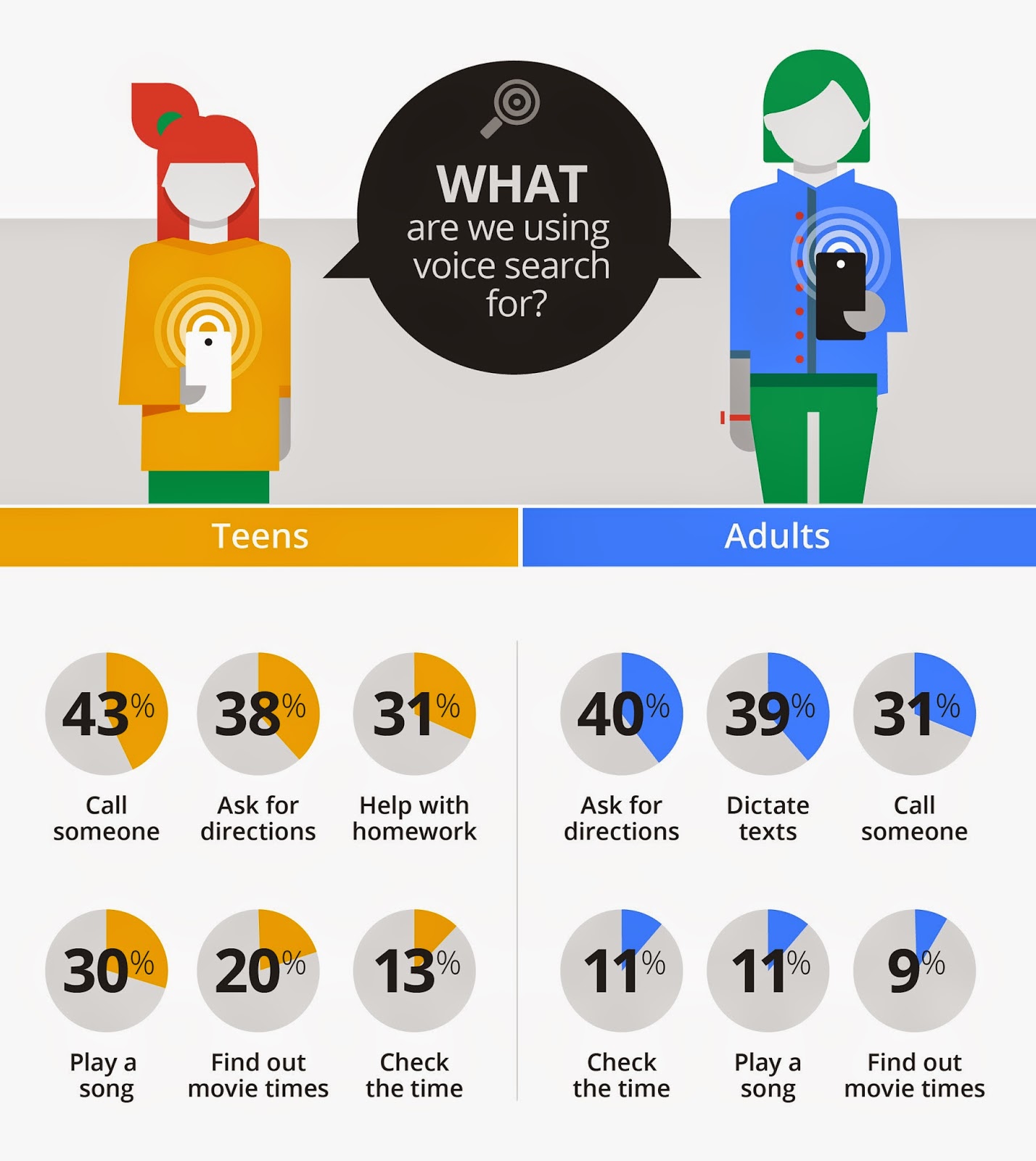

Source: SEOPressor
By 2020, 50% of all searches will be voice searches as per ComScore. This makes it important for digital marketers to optimize their websites and apps for conversational keywords rather than long-tail keywords as most of the queries of users are in natural, conversational language. They should even optimize their websites for local searches to answer area-specific questions. By utilizing AI-enabled voice search, brands will be able to drive organic traffic and enhance customer satisfaction.
5. Digital advertising
Artificial intelligence has made digital advertising more efficient and personalized. It can display ads based on users’ preferences, interests, and purchasing behavior. Facebook and Google Ad platforms, for example, use artificial intelligence and machine learning to serve relevant ads to consumers, thus increasing the chances of conversion. They analyze users’ information, their likes and dislikes including their demographics to determine which group of people to target. This not only increases the relevancy of ad campaigns but also ensures effectiveness and enhanced performance in less time.
AI can make advertisers pay the lowest possible cost, allowing them to reduce wastage of their ad spend as money is spent only on real consumer views. AI also makes it possible to ascertain which digital platforms are the most profitable to direct investment towards them.
Final words
Artificial intelligence is, therefore, expected to deliver several advantages to digital marketers, resulting in increased efficiency and maximized ROI. It will make content creation easier, deliver personalized content, and enhance conversion rates, revolutionizing the digital marketing space. Marketers will be able to make better decisions to achieve success in their campaigns and ensure customer satisfaction. As AI technology continues to develop, brands will get a chance to connect with their target audience on a deeper level.
This is the right time for you to integrate artificial intelligence in your digital marketing efforts to realize maximum benefits and keep up with the pace to gain competitive advantage.