


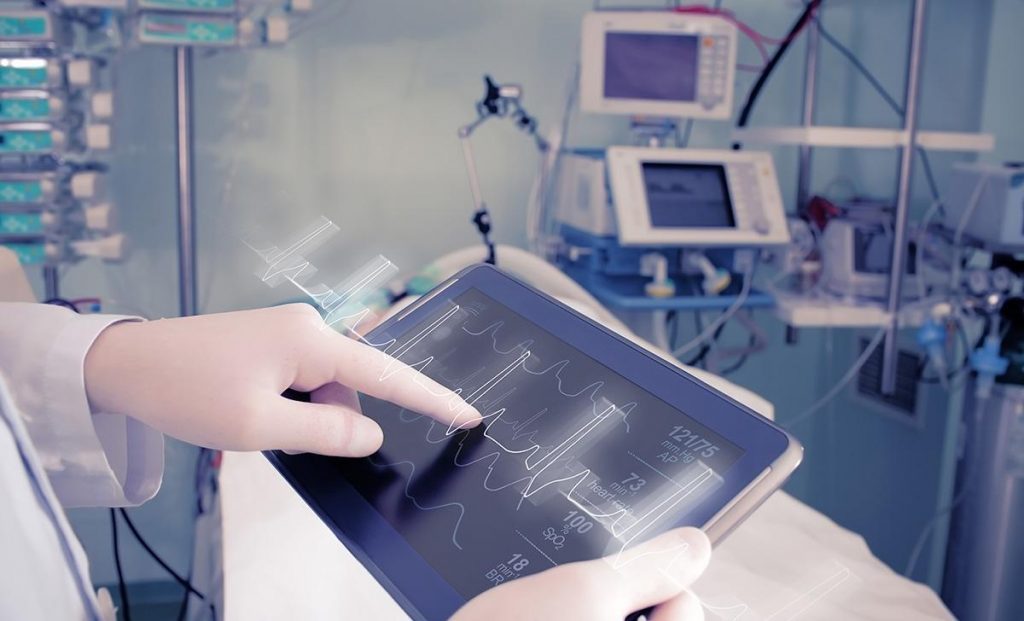
With the advent of Edge Computing, health care industry has transformed itself considerably, while hospitals and clinics are gearing up to take better and faster care of their patients.
In fact, Edge Computing has permeated the industry in such a powerful manner that clinicians and doctors heavily rely on them to treat patients.
As more and more devices get connected in the health care industry, networking among them all has really become huge because the data that keeps comes in is never going to slow down.
What is Edge Computing?
Edge Computing or Fog Computing is a technology by which the time between data capture and analytics are considerably reduced. It works by upending the system in such a manner that the devices themselves are configured to handle critical analysis on their own, and only the filtered ones will enter the user’s device.
Through this technology, patient management, remote monitoring, in-patient care, health information management all receive a burst of speed. As it adds a secure layer of computing power between the cloud and the device, there is no need to worry about information going into the wrong hands.
Health information management can come in various forms like wearables, home scales, Telehealth tools, healthcare apps, blood glucose monitor, heart rate monitor and plenty more, so while devices get smaller and data gets bigger, imagine the overload of information that keeps coming in.
Patient-generated health data or PGHD that could get converted into a huge and ever-growing mass of data on a daily basis must be handled efficiently, and this is where Edge Computing steps in.
Monitoring Critically Ill Patients
Edge Computing gathers the data of patients by monitoring their behavior and watching out for anomalies.
Take the case of epileptic patients, for instance. Through Edge Computing, patients can make use of softwares that monitor their health condition, detect the onset of an attack and notify a caregiver or family member, thereby ensuring timely care.
There are softwares that can create a diary of events and patients’ vitals (jerking movements, physical vibrations, whether the body is stable or falling, heart rate and so on) to determine treatment patterns.
Enjoy Better Response Times
If a hospital is really huge, naturally the number of devices connected will also be high, and this can put a massive strain on the healthcare network.
As more and more connected medical devices are being utilized in hospital settings each year, where all of them are being networked, (for example, with about 20 devices per bed; in ICU, this would be even higher), Edge Computing helps to produce better response times to the huge amount of data.
Aids in Patient Mobility
As hospitals have application specific infrastructure, the areas where the patients can be monitored is also highly limited. And when the patient is about to leave the highly instrumented infrastructure of the hospital, care has to be ensured that the patient receives sufficient level of monitoring.
With Edge Computing resources, this kind of transitioning between different environments can be managed more effectively. The next generation of health care devices is likely to replace costly and complex devices ultimately leading to something known as the Internet of Medical Things.
Edge computing, coupled with IoT, will bring new changes in key application areas of healthcare that will benefit both the patient and the healthcare provider (hospitals/clinics/caregivers, etc.):
On the body – Wearable devices, implants, peripherals fall into this category. These devices constantly monitor the patient’s health patterns and note the abnormalities before sending alerts to the healthcare provider.
At the hospital – The patient will be connected to smart devices and monitors that will continuously monitor the patient’s location in real time. The data from all the devices will be networked and analyzed.
At home – There are plenty of home medical devices, activity monitors and virtual assistants that would aid in monitoring the health condition of the patients, especially elderly patients who live alone.
IoT in healthcare has already seen new highs; let’s take a look at a couple of applications:
Activity trackers during cancer treatment
Patients undergoing cancer treatment can make use of wearables and apps to check on the diagnosis and treatment through the data collected on a daily basis. This will also monitor their appetite, lifestyle, activity level and fatigue level.
Ensuring adherence to treatment plans
Doctors can now be assured that their patients stick to the treatment plan through devices connected to mobile apps. It will also remind the patients to take their medicines on time.
Closing Thoughts
A growing number of healthcare organizations are adopting Internet of Medical Things to their IT infrastructure and they have already discovered that Edge Computing is far more effective than Cloud Computing.
This trend has improved the way in which hospitals and clinics use real time data collection and analytics to treat their patients. Accuracy and security of data coupled with cost benefits are also enjoyed when data is analyzed through real time environment.
And the good news is that the data does not have to be sent to the cloud. This prevents the bottlenecking caused by the huge volume of data constantly produced by all the IoT devices in action.