


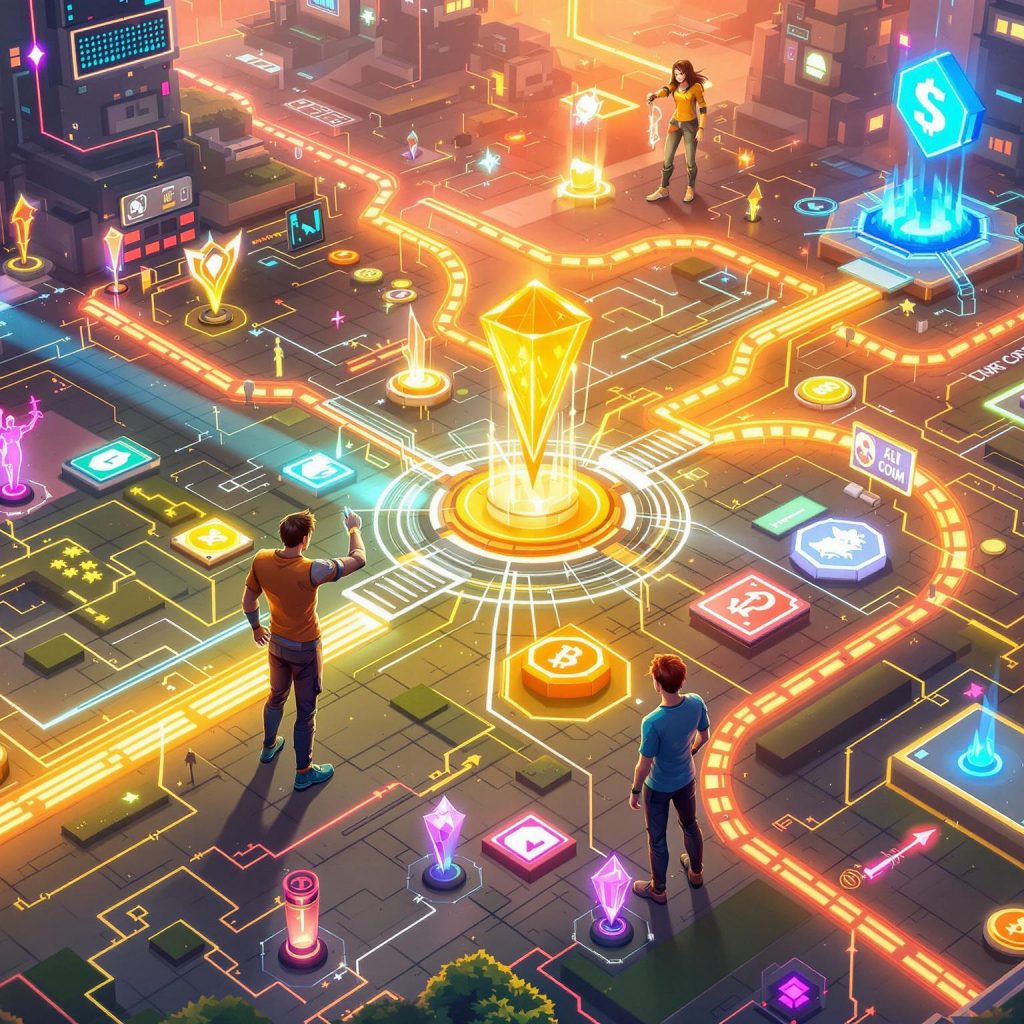
Cross-chain DApps are reshaping gaming by connecting different blockchains like Ethereum, Polygon, and Solana. This allows players to transfer assets, sync profiles, and interact seamlessly across networks. Here’s why they matter:
- Unified Gameplay: Use assets (like characters or items) across multiple blockchains without restrictions.
- Better Economies: Trade items across marketplaces, stabilize token values, and enjoy shared in-game economies.
- Enhanced Player Experience: Choose blockchains based on speed, cost, or security for specific actions.
- Streamlined Profiles: Achievements, rankings, and progress sync automatically across chains.
Despite challenges like delays and security concerns, cross-chain DApps are paving the way for interconnected gaming ecosystems with shared economies and smoother experiences.
Want to know how it works? Keep reading for details on asset transfers, unified profiles, and the future of cross-chain gaming.
Portal Pay – Bringing Cross-chain Payments to Gaming


Gaming Ecosystem Connections
Cross-chain gaming ecosystems connect different blockchain networks using specialized protocols and bridges. This approach enables gaming experiences that go beyond the limitations of single-chain platforms.
Moving Assets Between Chains
Cross-chain bridges let players securely transfer assets between networks while maintaining reliable communication across chains. For example, players can keep assets on one chain for added security or transfer them to another for quicker transactions. These systems rely on key elements like:
- Smart contracts to confirm ownership
- Message passing for communication between chains
- State proofs to validate transactions
With these tools, assets move smoothly between networks, and unified player identities enhance the overall gaming experience.
Cross-Chain Player Profiles
Beyond asset transfers, modern games now offer unified player profiles that work across multiple chains. These profiles ensure achievements, rankings, and progress are automatically synced, removing the hassle of managing multiple wallets or switching networks. By using decentralized identifiers (DIDs) to securely link accounts, players enjoy a more streamlined and connected experience.
This interconnected setup benefits everyone involved. Developers can focus on creating games for a wider audience, while players get a smoother experience that ties their progress and assets together seamlessly.
Game Economy Design
Cross-chain DApps open up the possibility for advanced in-game economies that function smoothly across multiple blockchain networks. These interconnected systems create exciting opportunities for both game developers and players.
Multi-Chain Token Systems
Cross-chain economies allow for dynamic token systems that give players more control and help stabilize in-game markets. Developers can achieve this balance using specific mechanisms:
- Liquidity Bridges: Facilitate instant token swaps between chains, helping maintain stable prices.
- Dynamic Minting: Adjust token supply based on activity and demand across chains.
- Chain-Specific Benefits: Assign certain activities to specific chains to lower transaction costs.
For example, high-value assets can be stored on one secure chain, while high-volume trading happens on another. This approach ensures smooth token movement while reducing transaction hurdles. It’s a strategy that sets the stage for broader success, as seen in real-world examples.
Success Story: Multi-Chain Game
The evolution of cross-chain gaming economies can be seen in how developers design balanced token systems across multiple blockchains. Here are some key practices:
1. Token Distribution
Developers ensure fair token distribution by setting minting limits, applying transfer cooldowns, and creating chain-specific utilities.
2. Stable Pricing
Maintaining consistent asset values is critical for cross-chain economies. Developers achieve this through:
- Automated market makers (AMMs) operating across chains.
- Incentive structures that promote balanced liquidity.
- Real-time price oracles for accurate conversions.
3. Reward Structures
Reward systems encourage players to engage in cross-chain activities. Examples include:
- Bonus rewards for holding assets across different chains.
- Special events designed to promote cross-chain participation.
- Reduced fees for frequent cross-chain traders.
sbb-itb-9e017b4
Player Features Across Chains
Multi-Chain Trading Systems
Cross-chain DApps are reshaping in-game economies by allowing players to trade assets across different blockchains. These systems break down traditional barriers between gaming ecosystems, creating unified marketplaces for exchanging items across chains.
Modern cross-chain trading systems typically include the following features:
- Universal Asset Recognition: Players can view and trade items from multiple blockchains through a single, easy-to-use interface.
- Automated Price Conversion: Real-time exchange rates ensure fair value for assets traded between chains.
- Chain-Optimized Transactions: Smart routing automatically selects the most cost-effective blockchain for each trade.
For these systems to work seamlessly, they rely on integrated bridges and liquidity pools. When set up effectively, players can focus on enjoying the game rather than worrying about the technicalities of blockchain management.
Making Cross-Chain Simple
Developers are now prioritizing simplicity in cross-chain interactions, aiming to make the experience as smooth and intuitive as possible for players. The goal is to hide the technical details behind user-friendly interfaces that feel natural to gamers. Here’s how they’re achieving this:
1. Unified Wallet Integration
A single wallet interface lets players manage all their assets without needing to switch between wallets for different blockchains.
2. Smart Defaults
The system automatically chooses the best chain for transactions based on factors like:
- Transaction fees
- Processing speed
- Network congestion
- Asset availability
This reduces the need for players to make technical decisions.
3. Visual Transaction Flow
Players can easily track their transactions with clear visual cues:
- Progress bars for transfers between chains
- Real-time status updates
- Estimated completion times
- Cost comparisons for transactions
4. Error Prevention
Built-in validation checks help avoid common mistakes, such as:
- Alerts for insufficient funds
- Verifying compatibility between chains
- Providing gas fee estimates
- Double-checking large transactions with confirmations
Problems and Future Outlook
Current Limitations
Cross-chain gaming DApps face several technical hurdles. Delays in cross-chain transfers can interrupt gameplay, and security issues in cross-chain bridges remain a concern. Scalability also suffers due to factors like network congestion, unpredictable transaction fees, complex smart contracts, and difficulties in creating a seamless user experience. Additionally, limited compatibility between blockchain networks further complicates development.
Next Steps for Cross-Chain Games
Developers are working on solutions to tackle these issues and improve cross-chain gaming. For instance, advancements in cryptographic verification methods may help speed up transaction finality. New blockchain designs that separate specific functions are being developed to boost both performance and security. There’s also a push to standardize asset transfers and simplify user interactions, aiming to make cross-chain gaming smoother and more accessible for players.
Conclusion
Cross-chain DApps are changing the gaming world by removing the barriers between different blockchain networks. They allow players to transfer assets across chains and participate in shared gaming economies, making systems work better together.
There are still challenges, like transaction delays and bridge security concerns, but the gaming industry is steadily improving its cross-chain capabilities. Features like persistent player profiles and assets across multiple blockchains open the door to more intricate gameplay.
Looking ahead, the future of cross-chain gaming depends on advancements in transaction speed, stronger security protocols, and easier-to-use interfaces. As standards develop and new technologies emerge, we’ll likely see more advanced cross-chain gaming platforms that give players greater freedom.
This shift in gaming isn’t just about technology – it’s about redefining digital ownership and connecting virtual economies. As these systems evolve, they may serve as the backbone for a new wave of games that go beyond the limits of single-chain platforms.