


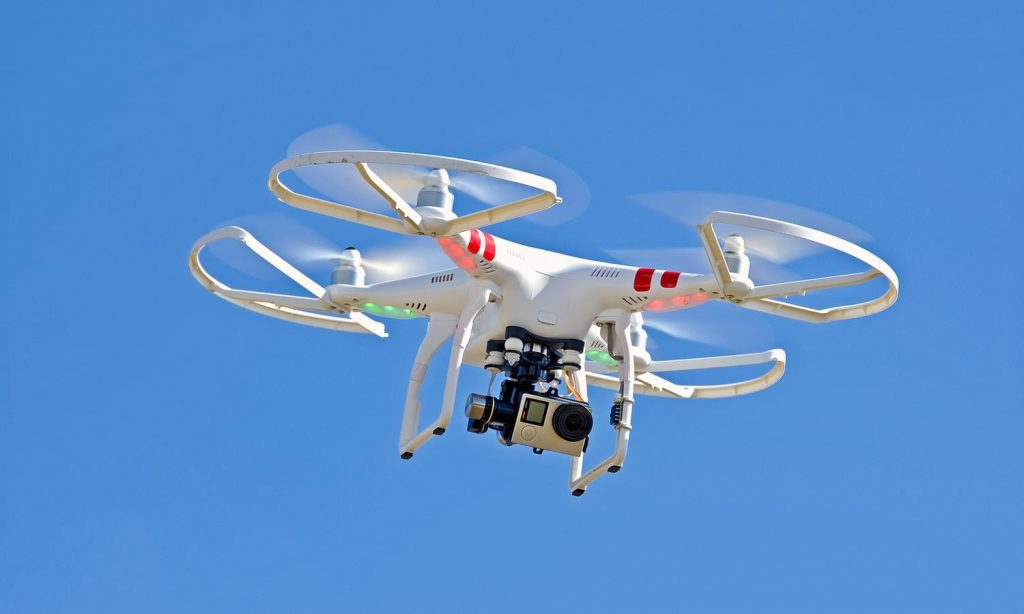
Weve all hear the bad stories about drones, from their uses in violence and war to their use to spy into someones bedroom on the fifth floor. Recently, drones have been receiving a bad reputation for their misuse, compelling many to see them as simply bad. However, these remotely-piloted machines have many uses that can range from pure entertainment to improving the environment to even saving lives. When you combine the drone footage with data from sensors that can be attached the drones, they can be utilized for the power of good, and in many ways are shaping the world we live in. Heres what their influence has benefited.
1. Cinematography and Photography
Whether its the latest blockbuster, an indie movie by a starting artist, or a documentary meant to spread awareness, people have always struggled to gain that perfect angle without the expenses of a helicopter or cranes. Drones have made this a problem of the past, allowing photographers and filmers to get access to difficult and beautiful angles, without disturbing the area and without great difficulty. This has made it possible for many fledgling artists to gain the perfect shot and allowed many film companies to save on costs.
2. Search and Rescue
When someone becomes lost in harsh or maze-like environments, its often a race against the clock for emergency personnel to reach the person before the weather, injuries, or wildlife see that its too late. Drones, however, offer a unique solution to this with their mobility and remote connection allowing a single person to operate the drone from safety, scanning forests or deserts to find the lost victim faster than helicopters or on-ground searchers could. Some drones even have infrared, allowing them to track down the lost person by their body heat, and then transmitting their location so rescuers can get to their position.
3. Wildlife Study and Conservation
Wildlife experts have often struggled to study animals when particular areas are unreachable or extremely dangerous. In some cases, they cannot properly study animals without disrupting their habitat. Drones offer the solution to both these problems, allowing experts to remotely survey and study animals in harsh environments and without startling or disturbing the creatures. In difficult areas such as the Amazon, experts can follow endangered species and catch poachers faster and more efficiently than before, not only improve their knowledge of the creatures but be saving their species as well.
4. Disaster Relief
When tragedy strikes, theres as much danger for the rescuers as there is for the survivors. Often, even if rescuers know that survivors are still living in the disaster area after a flood or earthquake, they still cant reach their location without risking fatality to themselves. By the time they have deemed the area safe enough to enter, its often too late to locate the victims. A drone, however, allows personnel to fly overhead and find the position of survivors and even safer routes for reaching them, so rescuers can reach them faster and more efficiently.
5. Emergency Personal Help
With LifeAlert and emergency functions in your car that automatically call the police if youve been in an accident, clearly people are in need of technology to help them out when theyre in life-threatening danger. SenseLab’s “phone-drone” SaveMe project has designed a drone where users can attach their phone and engage one of its four emergency functions. It can fly to the nearest Wi-Fi location or cell tower where it can send an email, make a phone call, or send a text indicating that its user is in trouble at a certain location.
6. Repairs
Buildrone’s drone design is made to not only gain access to underwater or hard to reach angles to assess gas, oil, chemical, and water pipelines, but can also identify if any leaks are present. To make it all the better, rather than letting such a leakage cause havoc or even death, the drone can apply repairs right on site no matter the angle. Huge leakages leading to natural disasters and deadly explosions will be avoided thanks to this drones efforts.
With the right intentions and the right sort of equipment (including big data tools like Cassandra or Hadoop), these machines are saving lives, the environment, and showing us birds-eye views never accessible before.