


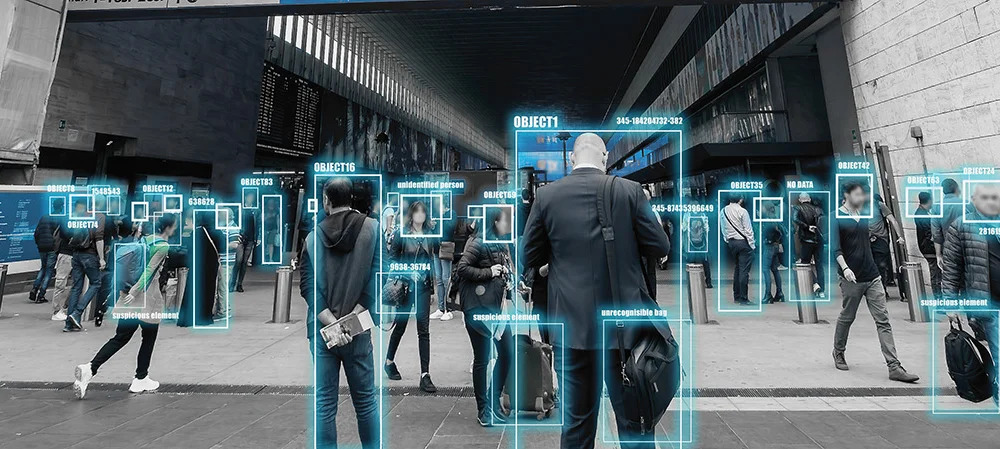
The digital age has ushered in a wave of AI and ML advancements, yet the performance of many of these depends on image annotation. As we stand on the cusp of technological breakthroughs in computer vision, understanding the future of image annotation becomes vital to grasping the trends.
Image annotation is a critical component in the building of computer vision systems and related Artificial Intelligence (AI) and Machine Learning (ML) models. It associates images with descriptive information, such as labels or metadata, to provide them with context. This task is fundamental for training AI and ML models to correctly interpret visual data.
Real-time image annotation holds immense importance in today’s data-centric world. We are living in an age where data is the new oil, and images form a large part of this invaluable resource. The data annotation market, which was worth USD 1.3 billion in late 2022, is projected to be worth USD 5.3 billion, growing at a CAGR of 26.6% through 2030.
From healthcare, where computer vision assists in disease detection, to the automotive industry, where it is crucial for self-driving cars and navigation systems, image annotation ensures that AI models are seamless in their function.
In this article, we will explore the present and future of image annotation, its methods, its increasing relevance in various sectors, and the ethical concerns that come with it.
The Current Landscape of Image Annotation
Image annotation trends will have developed significantly, incorporating advanced techniques and technologies to improve object recognition and data labeling. The process of image annotation began as a labor-intensive manual process, where humans took on the daunting task of labeling each image at a time.
However, as technology advanced, this tedious process underwent a transformation. Semi-automated and automated tools emerged, revolutionizing the way we approach privacy-preserving image annotation. These advancements not only streamlined the process but also enhanced the accuracy and efficiency of the annotations.
Here’s a snapshot of the present:
- More information and depth to the images: Semantic segmentation classifies every pixel in an image according to its category for more nuanced object recognition.
- Rise of automated annotation tools: Automated annotation tools have ushered a significant change, reducing the manual effort required in annotating large datasets. These AI-driven tools are often complemented by Transfer Learning, where pre-trained models are used to enhance the efficiency and accuracy of the annotation process.
- Augmented reality for real-time information: Augmented Reality (AR) annotation is emerging as a transformative technology, offering real-time annotations integrated into the user’s immediate environment. This is useful in fields like manufacturing and logistics, where real-time information can be critical.
Overall, the current landscape in image annotation is a blend of innovation and practical application, making strides in both efficiency and accuracy.
Analysing Future Technological Influences on Image Annotation
The future of this field is tied to advancements in Artificial Intelligence (AI) and Machine Learning (ML), as well as the rise of automation. Let’s dissect these technological influences to gain a clearer understanding of what lies ahead.
AI and the ML Revolution:
- Deep Learning Advancements: Deep learning technologies like convolutional neural networks (CNNs) and generative adversarial networks (GANs) have been nothing short of transformative. These technologies have added layers of complexity and nuance to image annotation, making it more context-aware. For instance, CNNs excel at identifying patterns and features in images, enhancing the quality of annotations. On the other hand, GANs can generate new image data, offering a richer dataset for annotation and model training.
- Transfer Learning: Transfer learning is another significant change in the image annotation niche. It allows for the leveraging of pre-trained models, reducing the time and data required for training new tasks. This is beneficial for smaller projects that may not have access to extensive datasets. By utilizing active learning and supervised learning, models have been trained on similar tasks, ensuring transfer learning drives quicker and more efficient annotation.
- Real-time Annotation: The future is not just about annotating static images; it’s about doing it in real-time. AI models capable of real-time annotation are becoming crucial, especially for applications like autonomous driving and surveillance. These models can process and annotate images on-the-fly, enabling immediate decision-making and action.
Automation in Annotation
- Self-learning Annotation Tools: The future of image annotation is not static; it’s changing with time. Enter self-learning annotation tools-systems that learn from their mistakes and improve their annotation accuracy. These multimodal learning tools adapt based on feedback and corrections, ensuring that the quality of annotations improves with each iteration.
- Integration with IoT: The Internet of Things (IoT) is growing at an unprecedented rate, and its integration with automated image annotation is a match made in tech heaven. As more cameras and devices become interconnected, automated image annotation will assume a pivotal role in analyzing and interpreting visual data. This will be impactful in sectors like smart cities, healthcare, and industrial automation.
- Scalability: Automation also brings the promise of scalability. As datasets grow in size and complexity, automated tools that can adapt to these changes become essential. Whether you’re dealing with a few hundred images or millions, these scalable systems ensure consistent performance, accuracy, and efficiency.
Challenges and Solutions in Advanced Image Annotation
While the future of image annotation is promising, it’s not without its challenges. As we push the boundaries of technology, we must also confront the issues that arise alongside these advancements. Here are some of the most pressing challenges in advanced image annotation and their potential solutions.
Data Privacy
The Challenge: As automation takes center stage, concerns about data privacy and security assume greater importance. For example, when annotating medical images, the risk of sensitive patient data being exposed or misused is a significant concern.
The Solution: One viable solution is the use of on-premises annotation tools that keep all data within the organization’s secure network. Also, encrypted data storage can further safeguard sensitive information. For instance, a healthcare organization might opt for an HIPAA-compliant annotation tool that ensures all patient data is encrypted and secure.
Bias in Automation
The Challenge: Automated tools are only as good as the data they’re trained on. If the training data contains biases, the automated annotation tool will inherit these biases. For example, a facial recognition system trained on images of individuals from a particular ethnic group may struggle to identify people from other ethnicities.
The Solution: Regular audits of the annotation process and the training data can help identify and mitigate biases. Using diverse training datasets that represent a broad spectrum of scenarios and demographics can further reduce the risk of bias. Organizations can also employ third-party audits to ensure an unbiased annotation process.
Quality vs. Quantity
The Challenge: The allure of automation often lies in its speed and efficiency, but this can come at the cost of quality. For instance, an automated tool might annotate thousands of images but miss subtle nuances that a human annotator would catch.
The Solution: Hybrid models or cross-model annotations offer a promising solution to this challenge. These models combine the speed of AI-driven annotation with the precision of human verification. For example, an AI model might perform the initial annotation, flagging uncertain cases for human review. This ensures a balance between speed and quality, leveraging the strengths of both automated and manual annotation. Some others prefer crowd-sourced annotations to reach the required quality.
Future Impact of Image Annotation: Efficiency, Cost Reduction, Quality, and User Experience
The transformative power of image annotation is not confined to technology alone. Its ripple effects are felt across various industries, driving efficiency, reducing costs, enhancing quality, and elevating the user experience. Let’s focus on how different sectors are leveraging advanced image annotation techniques to achieve these objectives.
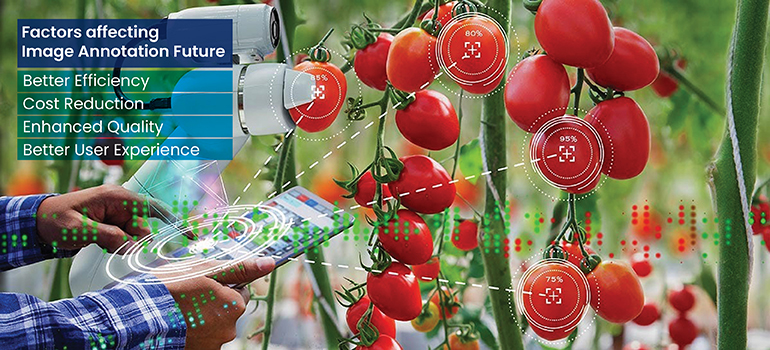

Increased Efficiency
By enabling more precise and comprehensive analysis, image annotation techniques are streamlining operational processes and significantly enhancing the accuracy, efficiency and quality of services provided.
- Healthcare: Advanced annotation techniques offer significant change in healthcare, especially in medical imaging domain. The ability to analyze medical images, such as X-rays and MRIs, accelerates the diagnostic process. For example, 3D image annotations can provide a detailed view of tumors in CT scans, aiding oncologists in devising precise treatment plans. This not only speeds up diagnoses but also facilitates timely interventions, helping to save lives.
- Automotive: In the automotive industry, especially in the development of self-driving cars, efficient annotation is indispensable. Real-time object recognition enabled by advanced annotation techniques makes autonomous driving safer and more responsive. For instance, if a pedestrian crosses the road, real-time annotation can help the self-driving car identify the obstacle and take immediate action, averting a potential accident.
- Retail: The retail sector is another beneficiary of advanced image labeling. Automated inventory management systems equipped with smart annotation tools can identify and track products swiftly. This streamlines the supply chain, reducing the time taken for restocking and minimizing errors, enhancing overall operational efficiency.
- Medical Imaging: Beyond general healthcare, advanced annotation also benefits specialised medical imaging. Pre-trained annotations assist radiologists in identifying anomalies in X-rays, MRIs, and other medical images. Using 3d image annotations, for example, can provide a detailed view of tumors in CT scans, aiding in precise treatment planning. This not only improves the accuracy of diagnoses but also allows for more targeted treatments.
- Real Estate: The real estate industry is leveraging Virtual Reality (VR) through image annotation to offer an unparalleled experience to potential buyers. During a VR property tour, users can look at annotated points in a room to get information about the materials used, dimensions, or even the history of specific architectural features. This eliminates the need for physical guides and offers an immersive, informative experience to the user. For instance, during a VR tour of a historic property, annotations can provide fascinating insights into the architectural heritage of the building, enriching the user’s experience.
By integrating advanced image annotation techniques, these industries are not just enhancing their operational efficiency but are also setting new benchmarks in quality and user experience.
Enhanced Quality and Accuracy
The impact of advanced image annotation trends extends beyond efficiency; it elevates the quality and accuracy of various applications across multiple industries. Let’s explore how.
- Healthcare: In the healthcare sector, semantic segmentation in medical imaging has been revolutionary. This technique allows for the accurate identification of anomalies, improving the quality of diagnoses. For instance, semantic segmentation can differentiate between healthy tissue and cancerous cells in an MRI, providing clinicians with a more accurate picture for treatment planning. 3D image annotations add depth to medical images like MRIs, offering more comprehensive views that facilitate better treatment planning.
- Agriculture: Precision agriculture is another field reaping the benefits of accurate image annotation. Drone-based image labeling, for example, captures aerial images of farmlands to identify areas where crops are wilting or where there might be pest infestations. This enables targeted treatment based on soil health and crop quality, reducing waste and increasing yield. Imagine a drone flying over a cornfield, capturing images that are then annotated to highlight areas suffering from a specific pest. This allows the farmer to apply pesticides only where needed, preserving the overall health of the crop.
- Security: Enhanced accuracy in facial recognition systems is crucial for security applications. Advanced image annotation techniques reduce false positives, improving the reliability of these systems. Top security agencies across the world are now employing these advanced applications. For example, airport security systems equipped with advanced facial recognition can more accurately identify individuals on watchlists, making air travel safer for everyone.
- Automotive: In the automotive industry, Augmented Reality (AR) annotation now enables mechanics to see real-time data overlays when working on vehicles, streamlining repairs and reducing errors. For instance, while repairing an engine, a mechanic could use AR glasses that display annotated images indicating the location of each part and its corresponding data, such as torque specifications. Image labeling aids in recognizing objects, pedestrians, and other vehicles on the road, ensuring safer navigation for both manual and autonomous vehicles.
- News and Media: The media industry is also leveraging the power of real-time annotations on live news feeds. This feature can provide context or fact-checking, making the consumption of news more informative and engaging. For example, during a live broadcast of a political debate, real-time annotations could appear on the screen to fact-check statements made by the candidates. This not only enriches the viewer’s experience but also reduces the chances of fake news, as these annotations are sourced from multiple image databases.
By enhancing the quality and accuracy of various applications, advanced image annotation is setting new industry standards. It’s not just about making processes faster or more efficient; it’s about making them better in every conceivable way.
Cost Reduction
The financial implications of advanced image annotation are profound, offering substantial cost reductions across various industries. Let’s examine how.
- Manufacturing: Automated annotation tools in manufacturing are a boon for quality control. By eliminating the need for manual quality checks, these tools reduce labor costs and errors. For example, an automated system could scan and annotate images of assembled products, flagging any that don’t meet quality standards, reducing the need for human inspectors.
- E-commerce: In the e-commerce sector, automated image tagging in product listings can cut operational costs. Rather than relying on manual data entry to tag and describe products, automated systems can handle this task, reducing both time and labor costs.
- Research and Development: The use of pre-trained annotation models in research and development can be a cost-effective strategy. These models reduce the computational resources required for training, lowering overall costs. For instance, a research lab studying plant diseases could use a pre-trained model to annotate images of leaves, saving both time and computational power.
- Retail: In retail, image annotation serves multiple purposes, including product recognition, inventory management, and customer behavior analysis. Augmented Reality (AR) annotation can provide real-time product information when a customer points their phone at a product, thus reducing the costs involved in an additional workforce for customer help.
User Experience
Enhanced user experience is another significant impact of advanced image annotation, making interactions more engaging, informative, and realistic across various sectors.
- Entertainment: In virtual reality gaming, semantic segmentation and AR annotation elevate the gaming experience. These technologies make the virtual environment more interactive and realistic, offering gamers an immersive experience unlike any other.
- Healthcare: Semantic segmentation is revolutionizing patient engagement in healthcare. For example, in radiology, it allows for interactive 3D visualizations during consultations, improving patient understanding. Predictive annotation in mammograms can highlight areas with a high likelihood of developing into malignant tumors, enabling early intervention.
- Retail: Augmented Reality (AR) annotation in shopping apps enhances customer satisfaction by allowing users to visualize products in their real-world environment before making a purchase. Imagine being able to see how a sofa would look in your living room before buying it, all thanks to AR annotation.
- Education: In e-learning platforms, automated image annotation tools can highlight key concepts in real-time as a lecture progresses. This feature enhances comprehension and engagement, making the learning experience more interactive and effective.
- Public Transport: Navigation apps equipped with semantic segmentation can improve the commuting experience by annotating crowded areas or available seats in real-time. This allows commuters to make informed decisions, enhancing their overall experience.
- Real Estate: In the real estate sector, annotations can provide detailed information about property images, enhancing virtual tours. 3D image annotations, for instance, can give potential buyers a realistic feel of the property, making the virtual house-hunting experience more engaging and informative.
By focusing on cost reduction and user experience, advanced image annotation becomes a strategic asset that offers a competitive advantage across industries. Advancements in image annotation are revolutionizing various industries by increasing efficiency, enhancing accuracy, reducing costs, and providing tailored solutions. These effects are not just incremental but transformative, setting new standards for future quality and performance.
Tools and Platforms: Revolutionizing Image Annotation
The implications of advanced annotations have led to the emergence of a plethora of data annotation tools and platforms. These solutions are not just enhancing the annotation process, but are also connecting businesses with the right resources to ensure high-quality outcomes. Let’s explore the specifics.
Latest Tools
Platforms like Labelbox and VGG Image Annotator offer a range of advanced features, such as semantic segmentation, object detection, and real-time annotation capabilities. For instance, Labelbox provides machine learning-assisted annotation, which speeds up the process while maintaining high levels of accuracy.
Connecting Businesses
Amazon SageMaker and Ground Truth are serving as a bridge between businesses and expert annotators. These platforms offer a marketplace where organizations can find and collaborate with skilled annotators, ensuring high-quality annotations. For example, a healthcare company looking for specialized medical image annotations can connect with experts in the field through SageMaker Ground Truth, ensuring that the annotations meet industry standards.
Challenges and Solutions in Use of Image Annotation Tools and Platforms
One of the most pressing issues is ensuring the quality and consistency of annotations. Off-the-shelf solutions may offer speed but often lack the flexibility to meet specific annotation requirements, leading to inconsistencies and errors.
- Regular Quality Checks
One way to mitigate this challenge is through regular quality checks. These checks can be automated or manual, depending on the complexity of the annotation task. For example, in a healthcare setting, a two-step verification process involving both AI and human expertise could be employed to ensure the highest level of accuracy in medical image annotations.
- Training Sessions for Annotators
Another solution is to conduct regular training sessions for annotators. This is important in industries like healthcare and automotive, where the margin for error is minimal. Training sessions can equip annotators with the latest techniques and guidelines, ensuring that the annotations meet the required quality standards.
- Tailored Image Annotation
While off-the-shelf solutions have their merits, custom image annotation platforms offer a level of flexibility and precision that is often unmatched. Custom platforms can meet the specific needs of a project or industry. For instance, a custom solution for agricultural image annotation could include features designed to identify various types of crop diseases.
Custom platforms can adapt to the volume and complexity of data, ensuring that they meet the demands of diverse projects. Also, these teams have built-in quality control mechanisms tailored to the specific requirements of the task, ensuring higher accuracy and consistency.
Conclusion: the road ahead for image annotation
Human expertise and technological advancements are driving image annotation towards a transformative shift. From healthcare and automotive to retail and public transport, image annotation is proving to be an indispensable tool. Custom solutions are emerging as the most effective way to balance efficiency, quality, and customization, with companies like HabileData setting benchmarks in quality assurance and iterative analysis. These advancements are making image annotation the backbone of AI and machine learning, serving as the foundation for accurate data interpretation and decision-making.
As we look to the future, the demand for high-quality image annotations will soar in burgeoning sectors like AR/VR, telemedicine, and autonomous driving. The implications of advanced annotations point to optimal quality, scalability, and efficiency, heralding a new era of innovation in the field.