


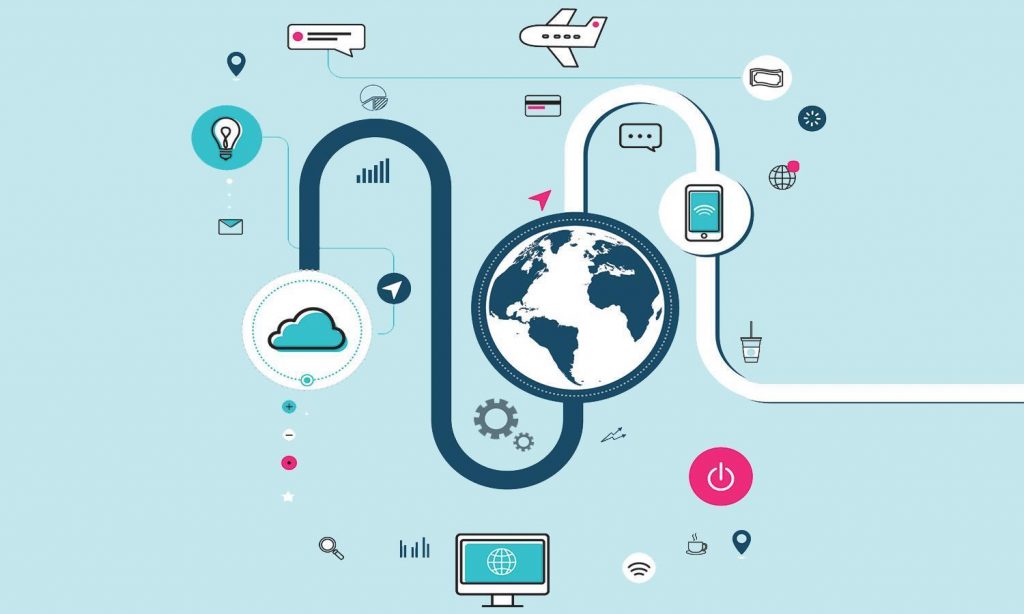
The Internet of Things is the network of physical objects like devices, vehicles, buildings and other items that have electronics and software embedded within them. They have sensors, and are networked so they can collect and exchange data. The IoT creates opportunities for integration of the physical world into computer systems. Each thing is uniquely identifiable through its embedded computing system and is able to operate within the existing internet infrastructure.
Experts estimate that the IoT will consist of almost 50 billion connected objects by 2020. According to McKinsey, if policy makers and businesses get it right, linking the physical and digital worlds could generate up to $ 11.1 trillion a year in economic value by 2025.
Think about this from a mobile perspective. In 2016 more than 1.5 billion smartphones were sold. We’re in a mobile world; a world where your mobile has evolved into the remote control of your digital life. There are 2.6 billion smartphone users today but more than 7 billion smartphones are in circulation among the 3.4 billion people who have internet, even though more than half of the global population has no access to internet today. The accessibility and speed of change is happening in mobile development. People are consuming the majority of information, content and entertainment through mobile devices, from tablets to small devices, to laplets.
A cashless society moves a step closer as consumers embrace mobile and contactless payments. This digital payment revolution is being led by Scandinavian countries like Sweden. People are discovering the safety of using tokens and biometric identification like Apple Pay to replace paper money and coins. In Africa, Kenyans use simple cell phones for everything from buying groceries to paying their rent, leading the way to a cashless Africa. Everything will have sensors embedded “ from your fridge to your shoes. Wearables, like smart watches or the sensors in your clothes, will measure your sweat, your blood pressure or your heart rate. Devices integrated into your wall will give you all the information you never knew you needed. Internables, sensors in your body, are the next big thing. All of this will fundamentally change the way we sell, go to market, communicate, collaborate, educate and live.
Here are some examples
Smart looking “ Google and Levis will release a smart connected denim jacket this fall for $350 for bicyclists to the market . It allows them control, through movements and tapping over their smartphones, of applications like music players and navigation using sensors woven into the jacket.
Smart clothes are potentially the future of wearables. OMsignal already offers a line of smart shirts, and soon a sports bra which tracks biometric fitness data will be available. More and more everyday items will be ready to connect to the internet straight out of the box to provide a wealth of data about us and our homes. Electro Muscle Simulation (EMS) Bodytec gear, with its origins in the medical space, brought to the market by the German Miha Bodytec, could change the way we do sports. Twenty minutes of exercise using the EMS Bodytec equals five hours of intensive training. Will this be the new way of doing sports? Fast and furious?
Wearable devices pave a way to provide our doctors with a data export containing our daily calorie intake, exercise, resting heart rate and sleep patterns with just a push of a button. As Dr Peter Lee, corporate Vice-President Microsoft Research, recently said, tomorrow’s breakthroughs will be to move from a visible world “ smart watch, smartphone, tablet, Amazon buttons “ to an invisible revolution in our homes and at work:
When computing moves to the Cloud, it disappears, yet becomes more powerful. When user interfaces become integrated with our environment, and we control them with natural’ controls like voice, gaze, gesture, we don’t even see the computers. When machine learning is at its best, we see the results, not the effort. When computing anticipates our needs, we don’t even notice it. When technology becomes more powerful, but less intrusive, it can fit into more parts of our world and solve an even wider range of problems.
Microsoft has announced the smart magic mirror that can read your emotions, recognise you and display weather and other information.
Internet of cows “ in Germany, a cow-monitoring system gives farmers insights that can boost milk production, smooth the calving process and ensure healthier experience relevant to the user, and this is just a first step on the path to integration of smart options straight into the machine itself.
Steffen Hake, a farmer, knows the time-consuming challenge of tending more than 240 cows for his family’s business “ but he has an edge that generations of farmers before him never had:
When I get up in the morning and put on my boots, I don’t go to the stables first. I check my PC for alerts about whether any cows are sick, and I’m in the know right away.
It’s an idea that might seem farfetched in one of the world’s most enduring enterprises: SCR Dairy calls it Cow Intelligence’, a novel pairing of gruelling, old-fashioned farm work with the cutting-edge connectedness of the IoT. SCR Dairy has now more than four million cows tagged around the world.
Amazon Dash Buttons “ a perfect example of the IoT is the Amazon Dash Buttons, launched in 2015, that function as a one-click ordering system to everyday products such as pet food, household supplies, baby supplies (Huggies, Pampers) and many more. The idea is that you stick a small adhesive button for a product on, for example, your washing machine. When you are out of washing powder you can order by pressing the button with the brand you like and it gets ordered automatically at Amazon, so you never run out of product “ a great customer experience relevant to the user, and this is just a first step on the path to integration of smart options straight into the machine itself.
Virtual Singapore becomes a smart nation “ sensors are going to be placed around Singapore that will monitor everything in the city.
Singapore, a tech innovation hub, is tackling tomorrow’s big challenges today. Melissa de Villiers, Editor Group
Why smart nation? Singapore is going beyond what smart cities around the world are trying to achieve. It is pulling everyone into the mix “ universities, research, technology start-ups and investment capital “ to tackle global challenges such as urban density, ageing population, healthcare, mobility and energy sustainability. While some might feel big brother at play, the benefits are huge: better traffic control, better public transportation, better control of energy spending, improved maintenance of public infrastructure, enhanced security and crime management, etc. A perfect example of the amplified impact of technology on society.
IoT is at a point of acceleration as hardware price continues to decline substantially while the power of computing available in the Cloud is growing exponentially.
Are you ready to have implantable wearables to be in your body like implantable smartphones, healing chips, smart tattoos or 3D smart organs?
More than half of all smartphone users believe internal advanced sensors within the human body will provide enhancements and deeper insights on their overall health and wellbeing like hearing, memory and vision within three years’ time, according to the 10 Hot Consumer Trends 2016 report from Ericsson ConsumerLab. These internables’ will initially have a similar focus to the current external body monitoring devices,’ the authors write. And of course they would love those to boost their communication capabilities.
There is no need to be scared of the developments in IoT. There are plenty of ways that your personal and business life will be enhanced, if you keep looking forward and stay energised.
If you would like to read my past or future posts then please click ‘Follow’ and feel free to connect via LinkedIn, Twitter@ovandu or Facebook. You might also be interested in my book The Dualarity or to sign-up for the newsletter on www.thedualarity.com. ‹