


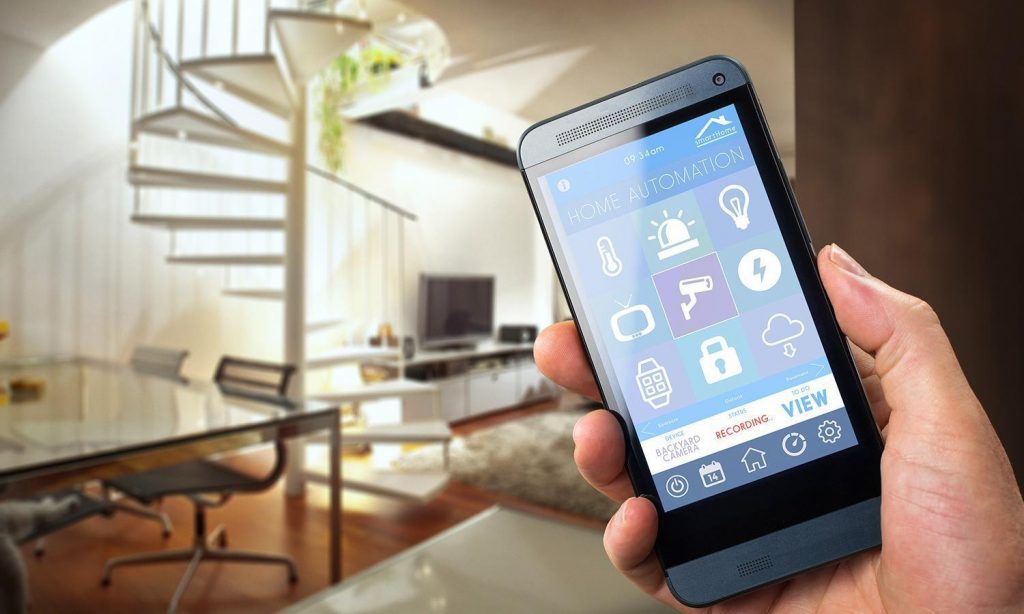
Fusing two trends together doesn’t always work out, but the tiny house movement and the Internet of Things seem well suited to one another. The smart home market is expected to reach over $121 billion by 2022, and 2017 has been an exciting year for new IoT smart home devices hitting the market. The tiny house market is, well, tiny by comparison, but modern tiny houses are well-suited to the optimization smart home devices can provide. Because every square foot must serve a purpose, IoT devices could potentially make living in these spaces easier and more comfortable. But what is being done to advance the IoT within the four walls of tiny houses?
Intel’s Smart Tiny Home
Intel Minim Homes, and Kyle Schuneman have already shown us what an IoT-powered tiny home could look like. An engineering marvel, the model tiny IoT-powered home is enough to make even a McMansion devotee stop and admire. With beautiful wood floors, a fully kitted out kitchen, and even an office space, this 264 square foot tiny home is everything a small space should be and more. What’s even better are the smart devices Intel has equipped to make living even more user-friendly. A camera with facial recognition software opens the door, making it impossible to lock yourself out (sorry locksmiths). The home can be controlled from anywhere in the world with a tablet or smartphone, and it can even detect leaky pipes, shutting them off before they can cause any damage. With those kinds of devices, leaving on vacation becomes a lot less stressful. Of course, more traditional smart home features are included as well ”thermostat and light control, as well as remote door locks. There’s even voice control!
Solving Tiny Home Problems
Intel is leading the way in solving common issues with tiny home living with their innovative model, but they’re not the only players interested in the subject. A 2016 hackathon in Seattle focused on developing IoT for tiny homes and automotive, and it only makes sense that the smart home industry would become part of tiny home designs of the future. With new sustainable choices for heating, cooling, and building, these options can easily be integrated with new technology to reduce utility costs drastically and cut down on carbon emissions ”an issue some home buyers consider when making a decision on their home. Tiny homes are often able to be completely off-grid, and IoT integration could potential make that even easier.
Could IoT Tiny Homes Be the Future of Everyday Living?
With all the stereotypes abound about Millennials, it’s easy to assume that the rising generation would be happy to live in a minimalist, tech-enabled dwelling that can satisfy wanderlust. While that might be true for some, others are looking to start families and build their careers ”goals which are not necessarily conducive to mobile tiny house living, even one equipped with smart home devices.
There would also be a lot of obstacles that would come before the potential widespread adoption of IoT-enabled tiny homes. Not everyone is prepared to downsize so drastically ”particularly growing families. Zoning is as a problem ”it’s the major Achilles’ heel of the industry, as zoning laws don’t often allow for tiny homes to be placed on land ”and then there’s the problem of utility hookups like water, power, and Internet. However, if interest in this type of living increases, laws may change to accommodate these homes, and it could get easier to place and use them. One thing is clear ”the IoT and the smart home industry are well-suited to each other, as long as someone is willing to live in such a small space.