


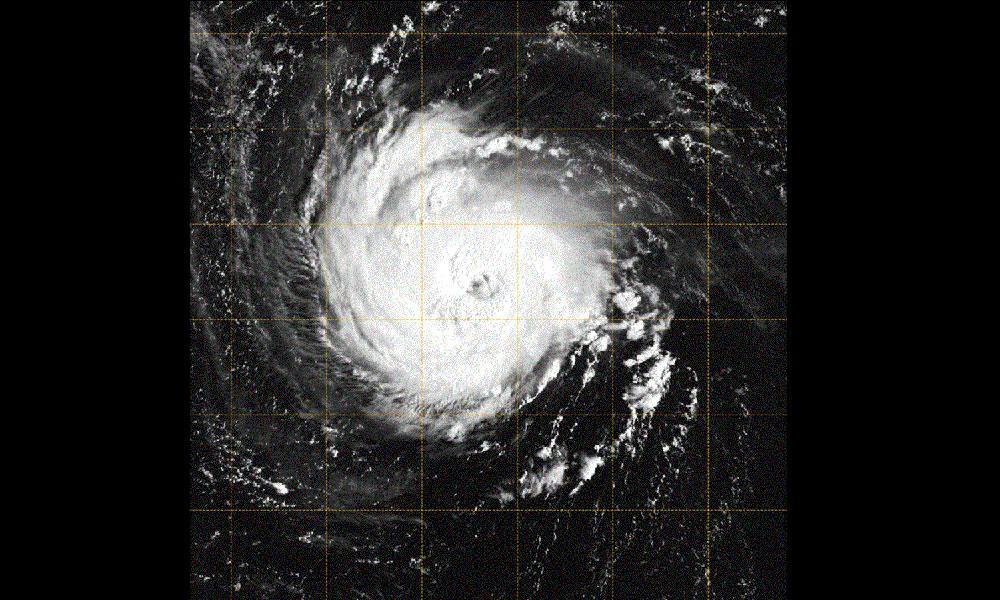
First Hurricane Florence; then Hurricane Michael close on its heels, the devastation from the latter rocking Mexico Beach and leaving it in shambles, four states suffering in the aftermath, human lives in the balance, the death toll from the class 4 storm numbering at least 32. How could big data and our advanced IoT technology help mitigate the effects of disasters like this?
We have powerful predictive analytics at our disposal. We have algorithms that can increasingly model future scenarios with surprising accuracy. We have a web of sensors and smartphones distributed across the country. It only makes sense to use these tech advancements to work on mitigating the effects of natural disasters, instead of simply using them to advance business interests.
The thing is, natural disasters hurt everyone, including businesses, not only because of the damage to property but because lives are lost. Furthermore, survivors can suffer from PTSD and a host of other problems after the fact, including depression, homelessness, and poor physical health. Hurricane Florence alone could end up costing $50 billion if not more. Clearly, the government, NGOs, and private interests need an all-hands-on-deck approach to solving the problem of natural disasters.
Predictive Technologies Currently in Place
Yes, there are some intriguing tech solutions for predicting natural disasters already in play, but are they helping? Let’s examine them courtesy of a resource on technology’s role in disaster aid relief from Eastern Kentucky University.
Big data-based solutions
In response to the increasing prevalence of severe forest fires (megafires), the National Center for Atmospheric Research (NCAS) developed a computer model that simulates the interplay of weather and fires. Not only does weather influence the occurrence of fires, the fires we see now create their own weather. Scientists use satellite data to issue a new forecast every 12 hours.
In response to the 2014 King Fire in California’s Sierra Nevadas, which took out 97,000 acres, the NCAS simulated with the help of lidar data and other extensive geographical/floral datasets from the Forest Service and NASA. Through the simulation, scientists determined that highly localized winds played a greater role in spreading the fire than vegetation and drought did. Thanks to this study, firefighting efforts are looking more towards real-time weather updates to figure out how local winds are affecting mega-fires.
When it comes to floods from hurricanes which are almost as deadly as the initial storm surge scientists are also using computer simulations to figure out where the influx of water will be critical.
First, they look at the radar, and detailed computer model forecasts to tease out a storm’s path. Then they run a streamflow simulation that takes into account approximately how much water the storm could drop, in hopes that the simulation will tell them which areas will be hit hardest by the deluge. Then, based on rates of the probability of flooding, which are determined by clustering algorithms, they relay information to local authorities so that evacuations and other preliminary measures can begin before the storm strikes.
Based on experience with Hurricane Harvey, Moor Insights and Strategy senior analyst Chris Wilder points out that machine learning allowed agencies to devise a set of recommendations for evacuation routes, resource staging, and the identification of locations for shelters along these routes.
Wilder is also excited about the IoT’s role because a wide variety of sensors and meters gather the data that machine learning algorithms use to make predictions.
IoT Solutions
The IoT plays a major role in disaster prediction. One emerging example is the U.S. Geological Society’s earthquake detection and warning efforts. The system they’re working on is called the Earthquake Early Warning (EEW) system, and there are systems like it in place in Mexico, Taiwan and Japan. In California, they’ve been testing out an EEW prototype, called ShakeAlert, since 2012. Recently, ShakeAlert was able to successfully detect and warn Pasadena residents about a 4.4 magnitude quake.
ShakeAlert and other EEWs employ a network of seismic sensors, as well as data loggers, in underground vaults. The sensors detect primary waves (P waves), which are the first seismic soundwaves a quake generates. Via radio and GPS, antennae above ground transmit data faster than the speed of sound to a central processing center, which sends a warning to public alert channels. The further they are from the quake’s epicenter, the more alert time people get.
According to the California Integrated Seismic Network, EEW systems provide enough warning time to slow and stop trains and taxiing planes; to prevent cars from entering bridges and tunnels; to move away from dangerous machines or chemicals in work environments, and to take cover under a desk; or to automatically shut down and isolate industrial systems. This could prevent a great deal of damage and save lives.
One Problem the End of Net Neutrality
You may have heard about the Carr Fire of 2018, a California mega fire that was so powerful it whipped up a tornado, destroyed 1,079 homes, consumed 230,000 acres, and killed seven people. The Santa Clara Fire crew used a command center vehicle to access the fire and weather-related data, as well as to direct deployment of personnel and vehicles. There was one problem: As they were fighting the fire, Verizon throttled their data.
This slowed down and impeded firefighting efforts. Verizon says the throttling was a customer service error and “has nothing to do with net neutrality.” But a Santa Clara County official said, “Verizon’s throttling has everything to do with net neutrality.”
Data can’t be effective for fighting natural disasters if its transmission rates are too slow. Before, when net neutrality was in place, Santa Clara Fire could have complained to the FCC, which would have been able to direct Verizon to lift the throttle. Santa Clara Fire was forced to email Verizon directly and was met with the response that they would have to buy a different data plan, all while homes, land, and people were burning.
When it comes to disaster predictions and response, lawmakers can’t allow a company like Verizon to get in the way because of a lack of net neutrality. Big data can increase safety. For it to properly do so, those who need it most must be able to transmit and receive data efficiently and effectively.